21 Jun 2026
Aerodynamic Innovations Transfer Cycling Bike Designs to Golf Clubs and Tennis Rackets
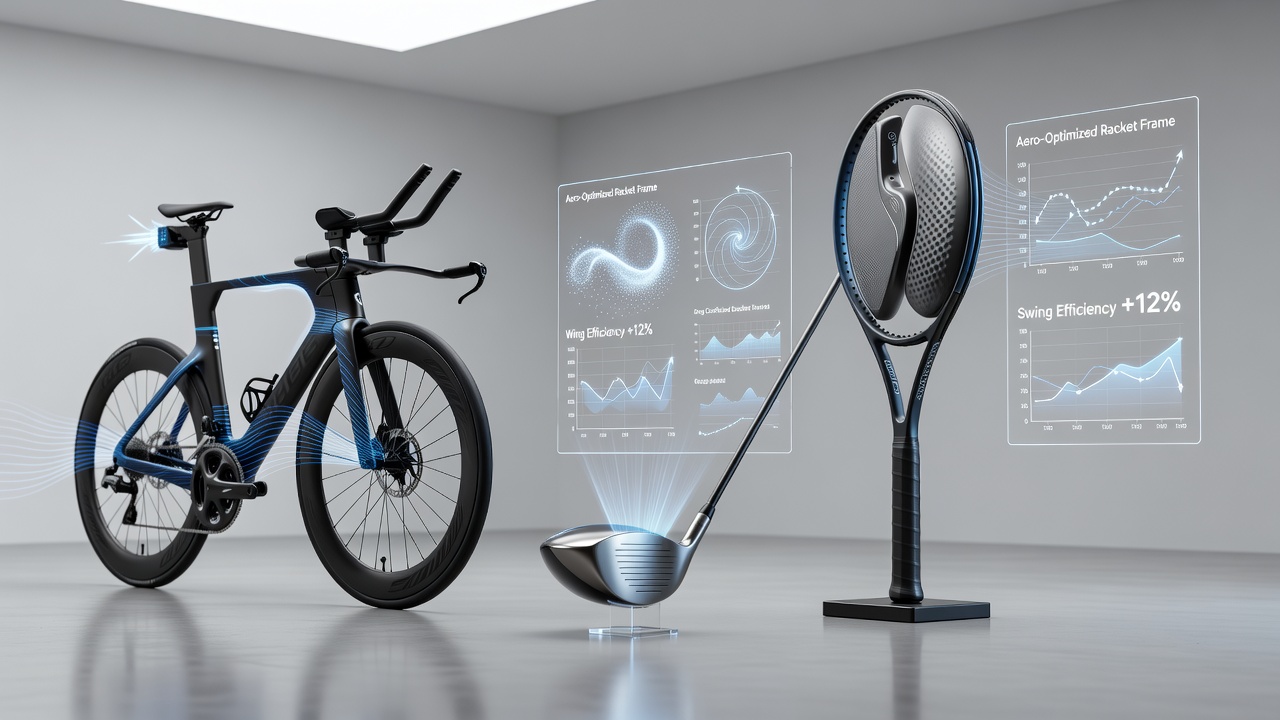 Engineers have drawn from decades of wind tunnel testing in competitive cycling where frame tubes evolved into airfoil profiles and truncated teardrop shapes that cut drag coefficients by measurable margins, and those same contours now appear in golf club heads along with tennis racket frames. Data from controlled experiments shows that reduced frontal area and smoother airflow separation allow athletes to generate higher clubhead or racket speeds without additional muscular input, since drag forces scale with the square of velocity during the downswing or stroke. Cycling manufacturers refined these shapes through repeated iterations in facilities that simulate race conditions at speeds between 30 and 60 kilometers per hour, producing tubing cross-sections that maintain laminar flow longer before turbulence sets in. Observers note that the same principle scales down effectively for the shorter arcs and different Reynolds numbers encountered in golf swings reaching 50 meters per second at impact and tennis strokes that peak near 40 meters per second.
Core Principles from Cycling Frames
Frame builders adopted Kammback rear profiles adn integrated cable routing to eliminate protrusions that trigger early flow separation, while dimpled surface textures on certain components further delayed boundary layer transition. Studies conducted at university wind tunnels confirmed that these modifications lowered overall drag by 5 to 12 percent depending on yaw angle, figures that translate directly when designers adapt the geometry to equipment swung through air rather than ridden through it.
Application to Golf Club Design
Golf club engineers have incorporated similar truncated airfoil sections into driver crowns and fairway wood bodies, allowing the head to slice through air with less resistance during the critical acceleration phase before impact. Shaft manufacturers meanwhile apply ovalized or teardrop cross-sections near the tip where velocity is highest, and internal testing data indicates these changes can add between 1.5 and 3 miles per hour of clubhead speed for players who swing in the 95 to 105 mile per hour range.
One study presented at an engineering symposium tracked ball speed gains when identical players used both conventional and aero-optimized drivers, revealing consistent increases that compound over a full round because the effect repeats on every tee shot. Adjustability features such as movable weights now sit within recessed channels that preserve the smooth leading edge rather than creating steps that increase turbulence.
Adaptations in Tennis Racket Frames
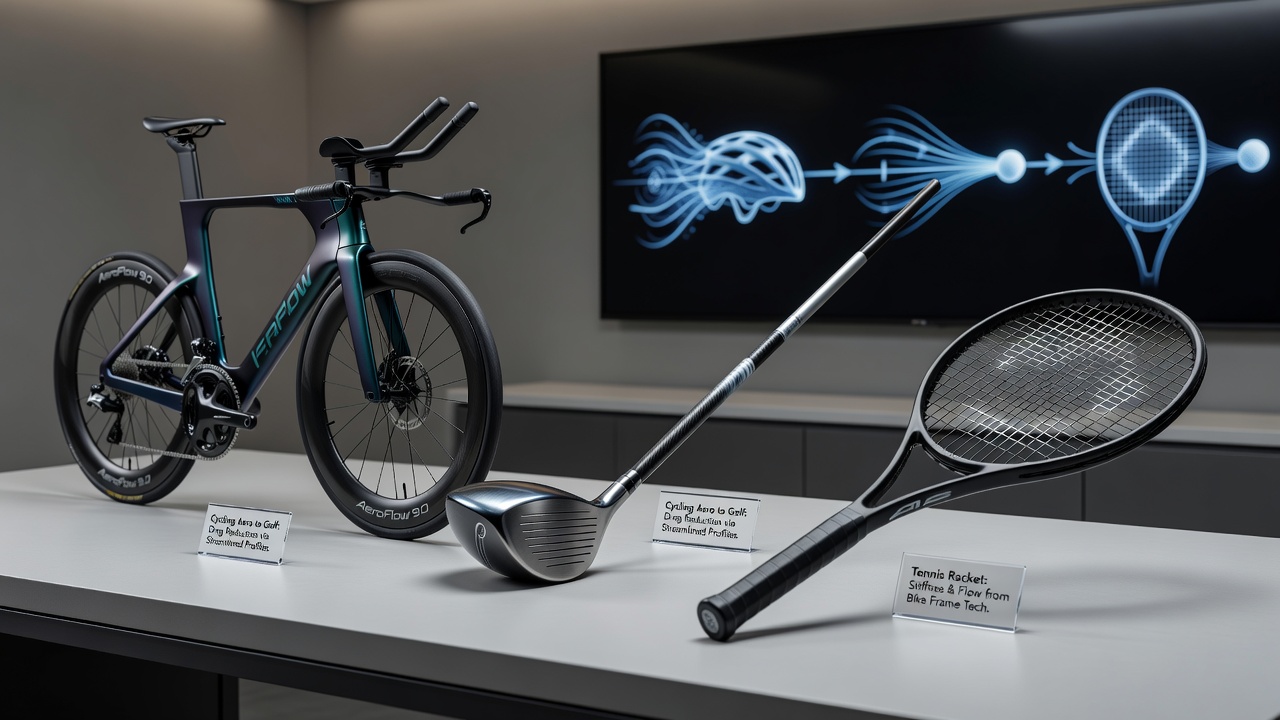
Tennis racket developers have introduced beam geometries that echo the asymmetric tube shapes found on time-trial bicycles, placing thicker sections on the leading edge and tapering the trailing edge to encourage attached flow around the hoop. Grommet strips and string beds receive flush mounting treatments that avoid the small ridges once common on older frames, and finite element analysis combined with computational fluid dynamics shows these refinements reduce air resistance by up to 8 percent across typical swing planes.
Players using prototype rackets in controlled trials recorded higher swing speeds on both forehand and serve motions, with the largest gains appearing during high-velocity motions where drag becomes the dominant opposing force. Manufacturers now publish drag coefficient charts alongside stiffness and string pattern specifications so coaches can compare models quantitatively rather than relying on subjective feel alone.
Measurement and Validation Methods
Researchers employ particle image velocimetry and high-speed pressure mapping to quantify how air moves around each new prototype, and governing bodies such as the United States Tennis Association accept equipment only after it passes standardized aerodynamic and performance criteria. In parallel, golf's ruling authorities maintain similar test protocols that include swing robot trials at fixed speeds to isolate equipment effects from human variation.
June 2026 brought new wind tunnel capacity online at several European research centers, allowing simultaneous testing of multiple club and racket orientations that previously required sequential runs. The expanded data sets now feed directly into iterative design software used by both large brands and smaller specialty houses.
Material and Manufacturing Integration
Carbon fiber layups developed for lightweight yet stiff bicycle frames carry over to rackets and clubs because the same unidirectional plies can be oriented to resist bending loads while preserving the external contours required for low drag. Internal foam or honeycomb cores fill voids without adding surface irregularities, and automated layup machines ensure repeatable leading-edge radii that manual processes sometimes varied.
Conclusion
Cross-pollination between cycling aerodynamics and striking sports equipment continues as computational tools grow more accessible and as athletes seek every lawful advantage within equipment rules. Wind tunnel and on-course data together demonstrate that drag reduction yields measurable speed increases when designs respect the fundamental fluid dynamics already validated on bicycles, and ongoing validation work ensures those gains remain consistent across player populations rather than appearing only in elite swings.