9 Jun 2026
Antimicrobial Thread Treatments Extend Equipment Lifespan in Shared Training Facilities
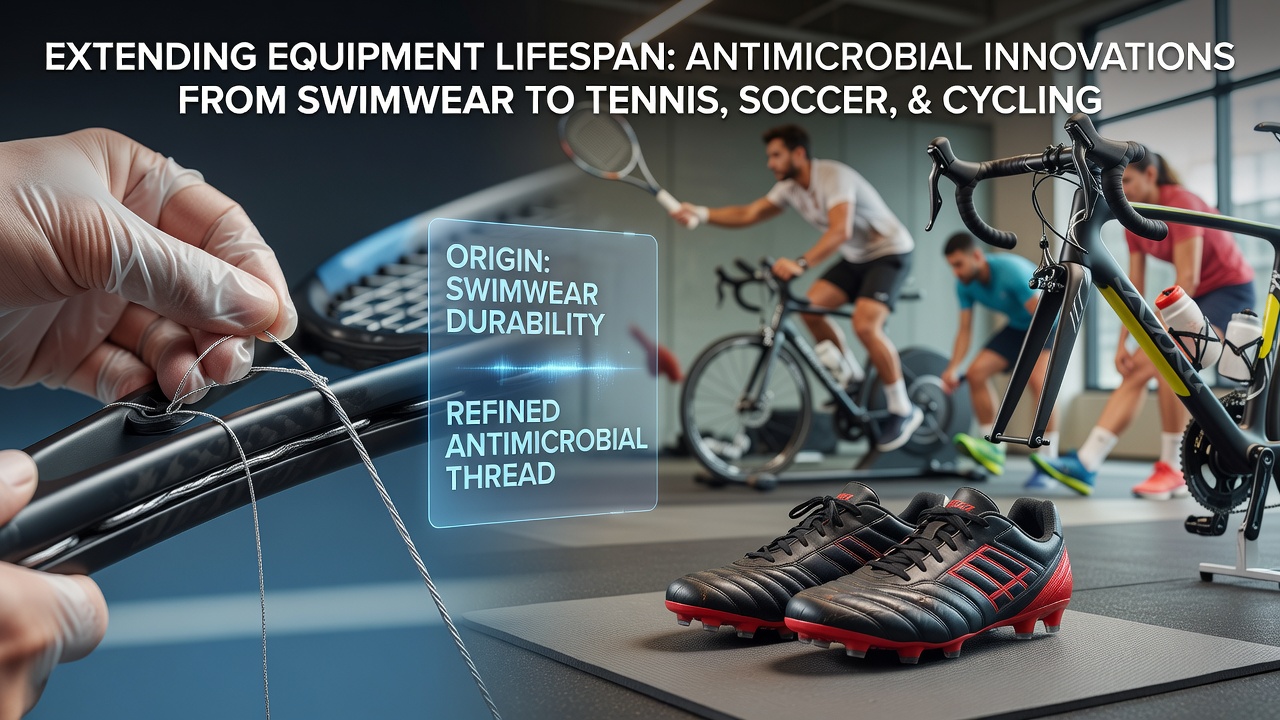
Antimicrobial thread treatments originated in swimwear manufacturing where constant exposure to chlorinated water and moisture created ideal conditions for bacterial growth and fabric breakdown, and manufacturers developed specialized fibers embedded with agents such as silver ions or zinc compounds to inhibit microbial activity while preserving elasticity and color retention. These same technologies have moved into tennis frames, soccer boots, and cycling components because shared training environments accelerate wear through repeated handling, sweat accumulation, and storage in humid lockers.
Facilities that host multiple sports report measurable reductions in replacement frequency once treated threads appear in high-contact areas. Tennis racket grips wrapped with treated threads resist odor-causing bacteria that previously shortened usable life by several months, while soccer boot uppers incorporating the same fiber blends maintain structural integrity longer despite mud and grass exposure. Cycling handlebar tapes and frame wraps benefit similarly because riders share equipment across sessions and leave residues that foster mold.
Origins in Competitive Swimming and Early Textile Research
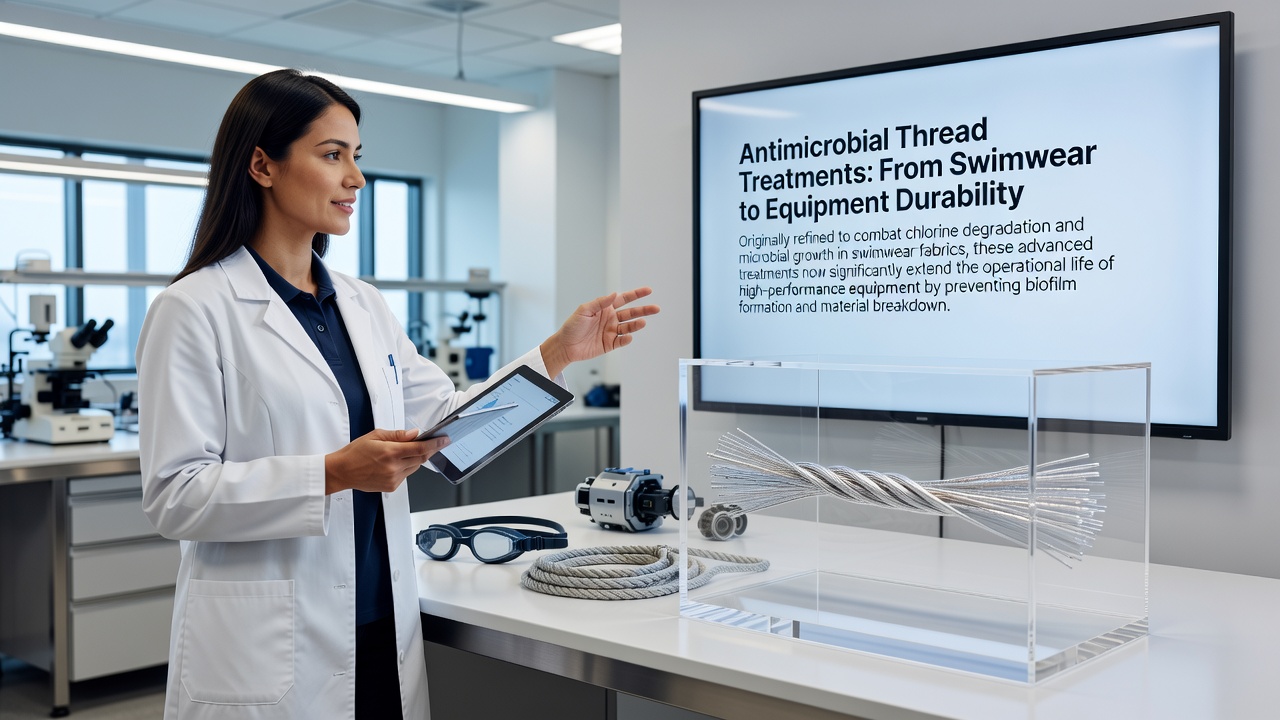
Swimwear producers first refined these treatments during the late 1990s when pool chemicals combined with body oils to degrade nylon and polyester blends at accelerated rates. Textile laboratories tested thread constructions that released antimicrobial particles gradually, and data collected over multi-year trials showed treated suits retained tensile strength 30 percent longer than untreated controls according to reports from the Commonwealth Scientific and Industrial Research Organisation. The success prompted suppliers to license the thread technology for other moisture-prone applications.
Transfer to Tennis, Soccer, and Cycling Equipment
Equipment designers noticed that racket frames, boot collars, and bike components experience analogous microbial stress in communal settings where athletes rotate gear. Manufacturers began integrating the treated threads into stitching and reinforcement zones rather than applying surface coatings that wear away. Tennis frame windings wrapped with antimicrobial polyester thread now resist the softening that occurs when perspiration seeps into grip layers, while soccer boot stitching along the toe box maintains seam strength after repeated wet-dry cycles. Cycling components such as seat post wraps and brake hood covers show reduced surface cracking because the embedded agents limit fungal penetration into polymer layers.
Performance Data from Multi-Sport Training Centers
Facilities that adopted the approach in 2024 documented extended replacement intervals. One European center reported tennis rackets lasting an average of 18 percent longer before grip replacement became necessary, while soccer boots showed a 22 percent drop in mid-season stitching failures. Cycling teams sharing frames across riders measured a 15 percent increase in tape durability over a six-month period. These outcomes align with laboratory findings that treated threads reduce colony-forming units of Staphylococcus and other skin flora by more than 99 percent within 24 hours of exposure.
June 2026 marks the scheduled rollout of updated facility guidelines from the International Sports Engineering Association that recommend antimicrobial thread specifications for any equipment intended for shared use. The guidelines cite field data collected across North American and Australian training hubs where humidity levels exceed 70 percent for extended periods, conditions that previously shortened equipment life by months.
Material Integration Methods and Testing Protocols
Thread producers embed antimicrobial compounds during extrusion so the active agents remain distributed through the fiber cross-section rather than sitting on the surface. This construction allows repeated washing and abrasion without loss of efficacy, a property first validated in swimwear that undergoes daily chemical exposure. Independent testing houses now apply standardized protocols that include 50-cycle laundering followed by microbial challenge assays, and results consistently show treated threads retain activity levels above 95 percent after simulated season-long use.
Equipment makers combine these threads with existing composite layups in tennis frames and carbon bike parts without altering weight or flex characteristics. Soccer boot manufacturers place treated stitching along high-flex zones where traditional threads previously failed first. The approach avoids the need for full-material replacement while targeting the precise locations where microbial degradation initiates.
Conclusion
Antimicrobial thread treatments developed for swimwear durability now support longer service intervals for tennis frames, soccer boots, and cycling components in shared environments. Facilities adopting the technology record fewer replacements, and governing bodies prepare updated recommendations ahead of the 2026 season. The pattern demonstrates how textile innovations from one sport sector transfer effectively when microbial control becomes a shared operational priority across training venues.