17 Jul 2026
Aviation-Inspired Drag Mapping Shapes Modern Sports Equipment
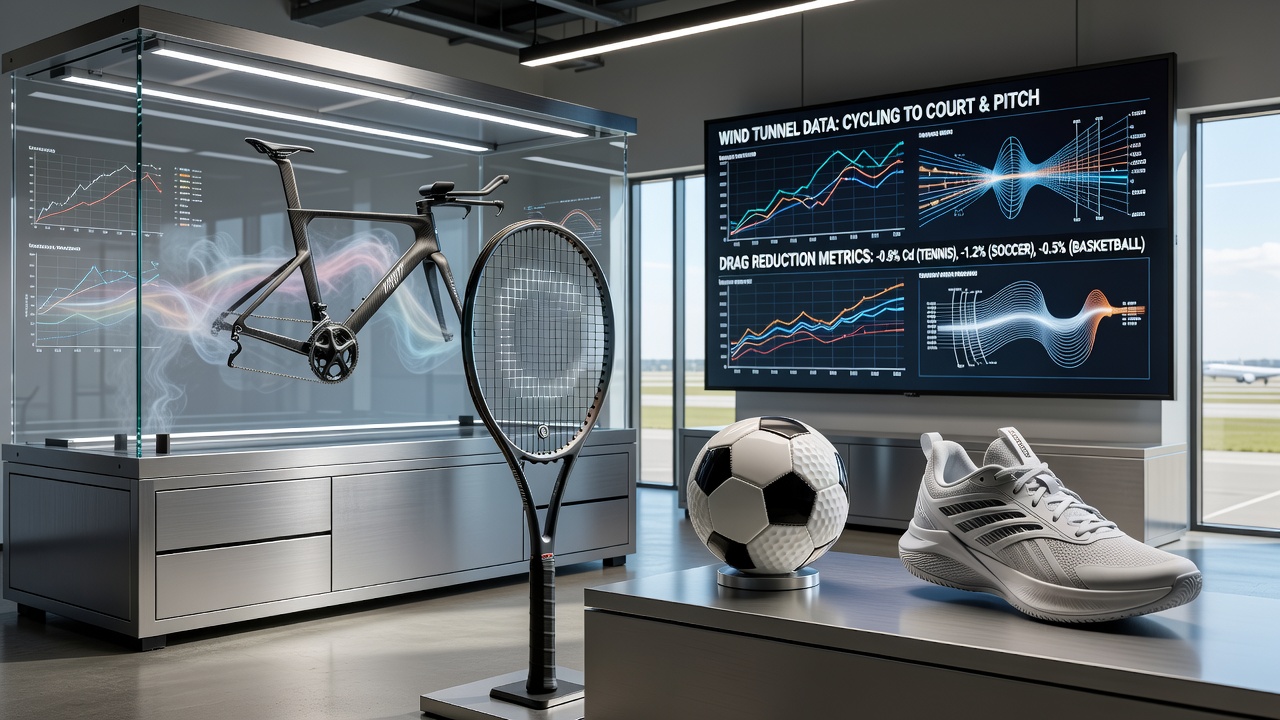
Engineers have transferred wind tunnel protocols first developed for aircraft and later adapted to bicycle frames into the design of tennis rackets, soccer balls, and basketball shoe uppers, and these transfers continue to produce measurable reductions in air resistance during elite competition. Data collected from cycling frames in controlled airflow environments now guides panel curvature on soccer balls, string bed geometry on rackets, and surface textures on shoe uppers so that athletes encounter less drag while sprinting or striking. The approach relies on pressure mapping and particle image velocimetry techniques that originated in aviation testing facilities and have been scaled down for smaller sporting goods.
Origins in Cycling Frame Development
Wind tunnel work on bicycle frames began with measurements of tube shapes and rider positions that reduced overall drag coefficients by measurable percentages, and researchers documented these gains through repeated runs at speeds typical of professional road racing. Those same protocols now extend to racket frames where the head and shaft interact with air during a serve, while similar surface mapping informs the dimple patterns and seam placement on soccer balls that travel at comparable velocities. In basketball, upper materials receive targeted texturing that smooths airflow over the foot during lateral cuts and accelerations.
Application to Tennis Racket Frames
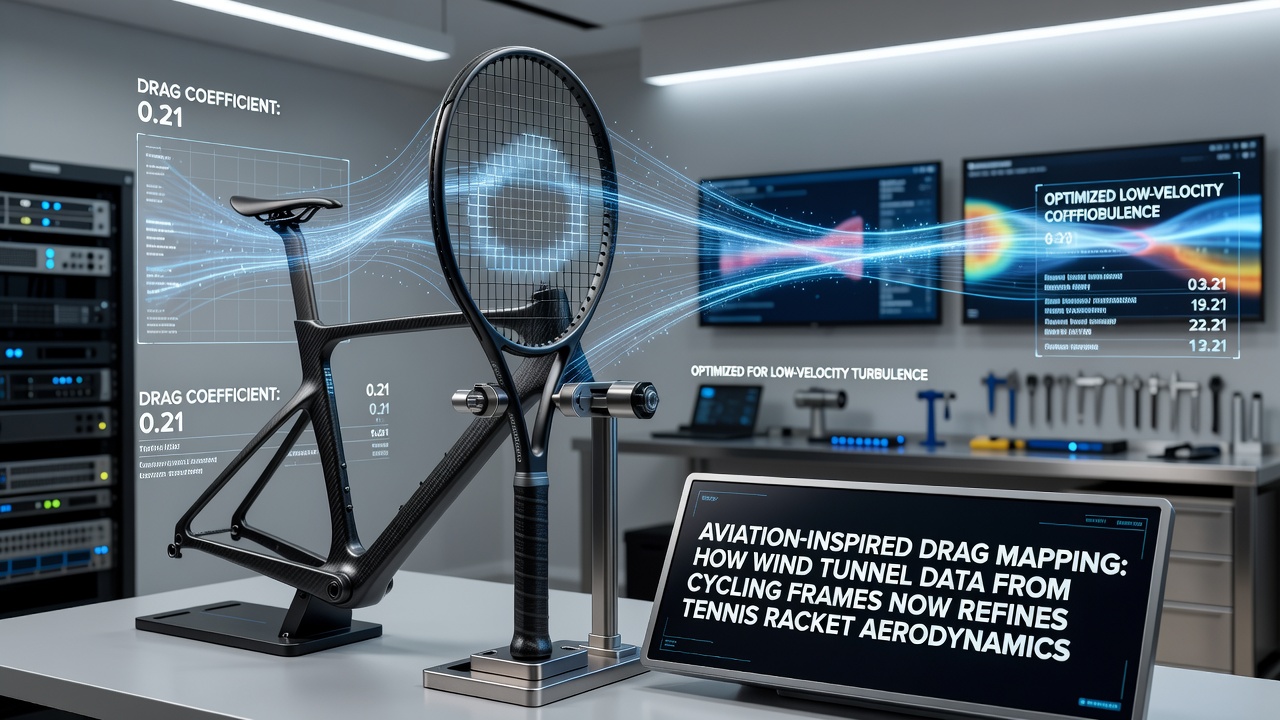
Frame manufacturers mount full-scale rackets in wind tunnels and record force data at angles and speeds that replicate serves and groundstrokes, then adjust beam thickness and grommet placement to lower resistance. Studies from the University of British Columbia have shown that small changes in frame cross-section can alter the wake turbulence behind the racket head, producing consistent drag reductions across multiple swing paths. These refinements translate directly into higher ball speeds because less energy dissipates into air resistance during the brief contact phase.
Refinements in Soccer Ball Panels
Panel layouts on soccer balls now follow drag maps derived from cycling frame tests, with manufacturers varying seam depth and panel curvature to stabilize flight at different velocities. Testing in European facilities has confirmed that balls constructed with these patterns maintain steadier trajectories when struck at speeds above 25 meters per second, reducing erratic movement that defenders and goalkeepers must anticipate. The same datasets also guide the placement of surface textures that trip airflow at precise points, preventing early separation that would increase overall drag.
Updates to Basketball Shoe Uppers
Shoe designers apply similar mapping to upper materials by testing textured zones that reduce drag during forward sprints and lateral movements, and data from these trials show that optimized surface patterns lower the force required to reach top speed in short bursts. In July 2026, several performance labs plan to release comparative results from wind tunnel sessions that include both cycling-derived reference models and prototype basketball footwear, allowing direct measurement of time savings over 10-meter and 20-meter distances. The resulting upper constructions incorporate micro-ridges and laser-cut perforations positioned according to airflow data rather than aesthetic considerations alone.
Performance Measurements Across Sports
Timing systems at elite events record the cumulative effect of these drag reductions, and analysts note that even fractional improvements in equipment can shift outcomes when margins separate medal positions. Researchers compare baseline equipment against updated versions using the same athletes in repeated trials, isolating the contribution of aerodynamic changes from training or physiological factors. Data collected across multiple sessions indicate that racket modifications, ball panel adjustments, and shoe upper refinements each contribute small but additive gains that appear in serve speeds, shot velocity, and sprint times.
Cross-Sport Data Sharing Practices
Collaboration between cycling component manufacturers and other sports equipment companies occurs through shared testing protocols and anonymized datasets rather than direct technology transfer agreements, and this practice allows independent validation of results across different facilities. Wind tunnel operators standardize measurement techniques so that drag coefficients recorded for a tennis racket can be compared directly with those from a soccer ball or shoe upper, creating a common reference framework. Observers note that facilities in Australia and North America now exchange calibration standards to ensure consistency when equipment from one sport serves as the benchmark for another.
Future Testing Directions
Additional research programs scheduled for late 2026 will expand the mapping process to include variable humidity and temperature conditions that affect air density during outdoor events, and these conditions alter the drag forces experienced by athletes in ways that indoor tunnel tests have not yet fully quantified. Equipment designers continue to refine sensor placement on test models so that pressure readings capture localized effects around grommets, seams, and laces that influence overall performance. The ongoing integration of aviation-derived techniques into these smaller-scale applications demonstrates how established measurement methods scale across different object sizes and velocity ranges.
Conclusion
Wind tunnel protocols developed for aircraft and refined through cycling frame testing now guide iterative design changes in tennis rackets, soccer balls, and basketball shoe uppers, delivering documented reductions in drag that appear in elite performance metrics. Continued data sharing between testing facilities and equipment manufacturers supports further refinement, while upcoming comparative studies will provide additional benchmarks for how these aerodynamic adjustments accumulate across different sports and event formats.