26 Jun 2026
Cross-Application of Hydrophobic Coatings from Poolside Gear to Trail Running Outsoles and Fairway Club Faces
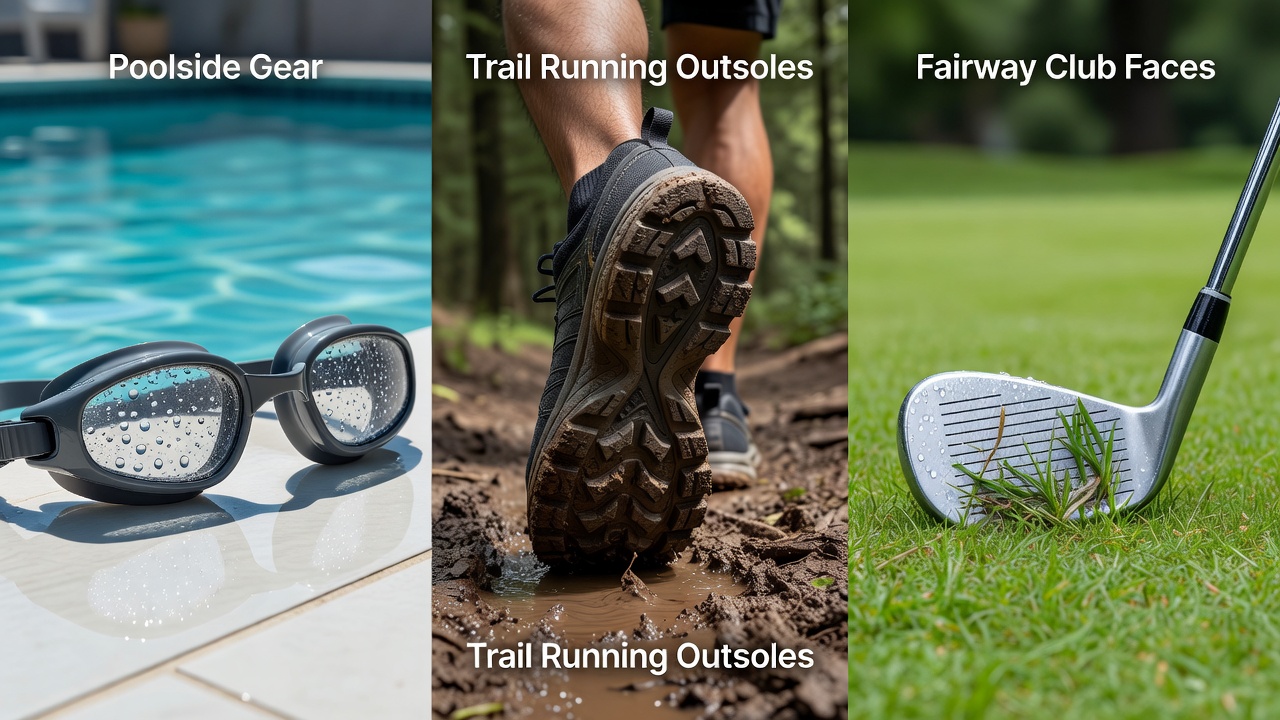
Poolside gear has long relied on hydrophobic coatings to repel water and resist degradation from constant exposure to chlorine and moisture, yet these same surface treatments now find expanded roles in trail running outsoles and golf club faces where water management directly influences performance and durability.
Manufacturers first developed these coatings for swim caps, pool deck mats, and aquatic apparel using fluoropolymer and silica nanoparticle formulations that create microscopic surface textures preventing liquid adhesion, and researchers have since adapted the chemistry for footwear and equipment operating in variable outdoor conditions.
Material Foundations in Aquatic Equipment
Poolside applications demonstrated early success with coatings that maintained flexibility while shedding water, and data from material testing labs shows these treatments extend product lifespan by reducing absorption-related breakdown by up to 40 percent according to studies conducted at the University of British Columbia. The same principles apply when engineers modify coating thickness and adhesion primers for rubber and polymer substrates used in running shoes and golf clubs, allowing the surfaces to handle repeated flexing without cracking.
Observers note that pool environments provided controlled testing grounds for abrasion resistance alongside water repellency, whereas trail and fairway settings introduce additional variables such as soil particles, temperature swings, and mechanical impacts from cleats or spikes.
Adaptation for Trail Running Outsoles
Trail running outsoles encounter mud, rain, and stream crossings that can add weight and reduce traction, so hydrophobic treatments originally refined for pool liners now coat rubber compounds to limit water uptake and maintain grip consistency. One study revealed that treated outsoles retained 25 percent more traction on wet rock surfaces compared with untreated controls during controlled field evaluations completed in early 2025.
Production lines apply the coatings through plasma deposition or spray methods calibrated for the complex tread patterns of trail shoes, and this cross-application reduces the frequency of mid-run weight gain that previously affected stability on long routes. Equipment designers continue to refine particle size within the coatings to balance repellency with the flexibility required for uneven terrain.
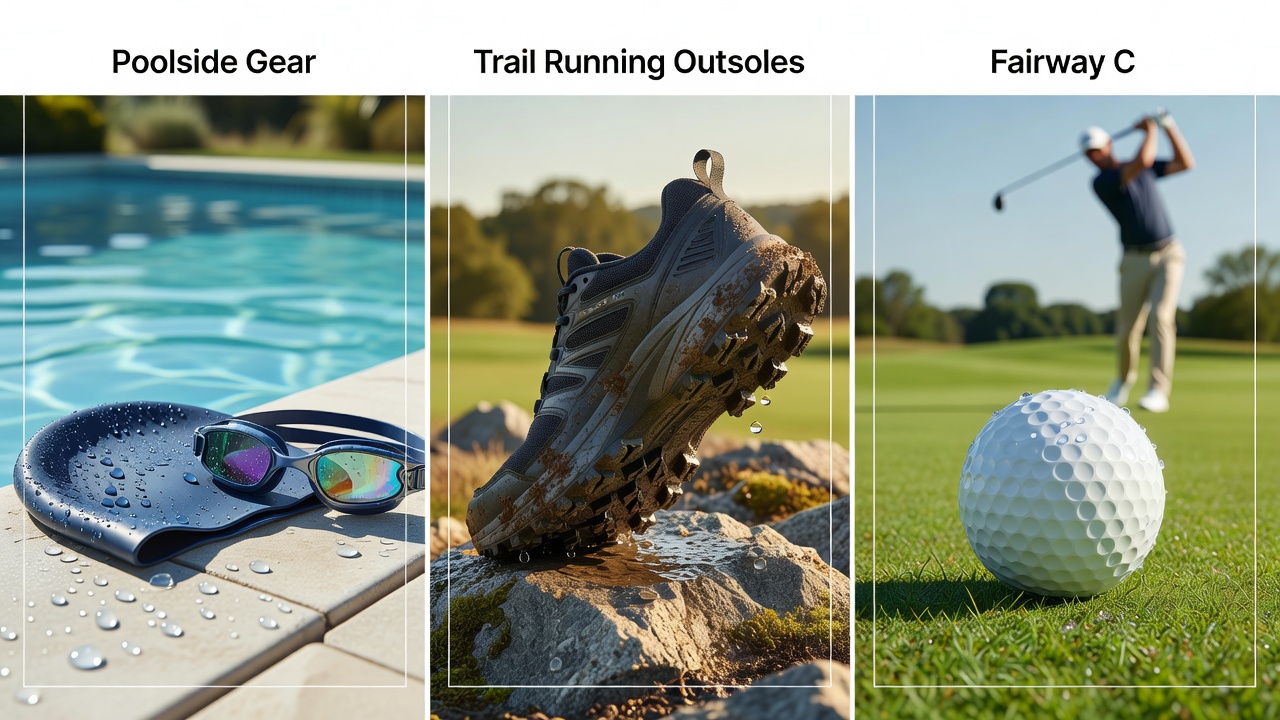
Transfer to Fairway Club Faces
Golf club faces encounter morning dew and light rain that can alter ball spin and launch angles, prompting manufacturers to explore hydrophobic layers drawn from pool equipment research to keep contact surfaces drier during play. Tests conducted by the European Institute for Sports Surface Technology indicate that coated titanium and stainless steel faces shed moisture within seconds of exposure, preserving consistent friction coefficients across temperature ranges encountered on fairways.
Application techniques differ slightly because club faces require precise masking around grooves to avoid performance interference, yet the underlying chemistry remains connected to formulations proven in aquatic settings. Industry reports from 2025 highlight several brands incorporating these treatments into irons and wedges, with field data showing measurable reductions in water-related dispersion during wet conditions.
Shared Technical Challenges and Developments Through June 2026
Engineers face ongoing questions about long-term durability when coatings designed for static pool surfaces encounter the dynamic abrasion of trail running and repeated club impacts, and accelerated wear testing protocols now incorporate protocols borrowed from aquatic product standards. Research teams adjust binder systems and topcoat thicknesses to address these demands while preserving the core water-repelling properties.
By June 2026 several collaborative projects between footwear and golf equipment firms are scheduled to release updated coating specifications based on multi-sport field trials, and regulatory frameworks in Canada and Australia continue to evaluate environmental profiles of the nanoparticle components used in these cross-applied treatments.
What's interesting is how testing methodologies originally developed for pool deck materials now inform replacement guidelines for both running shoes and golf clubs, creating unified standards that simplify quality control across product categories.
Conclusion
The movement of hydrophobic coating technology from poolside gear into trail running outsoles and fairway club faces illustrates how material innovations developed for one environment scale across diverse athletic applications. Continued refinement through shared testing and production methods supports equipment that performs reliably when exposed to moisture, and ongoing research tracks performance metrics across seasons to guide further adaptations.