2 Jun 2026
Material Fatigue Testing Protocols Determining Replacement Cycles for Yoga Mats, Boxing Gloves, and Fitness Trackers in High-Intensity Training Regimens
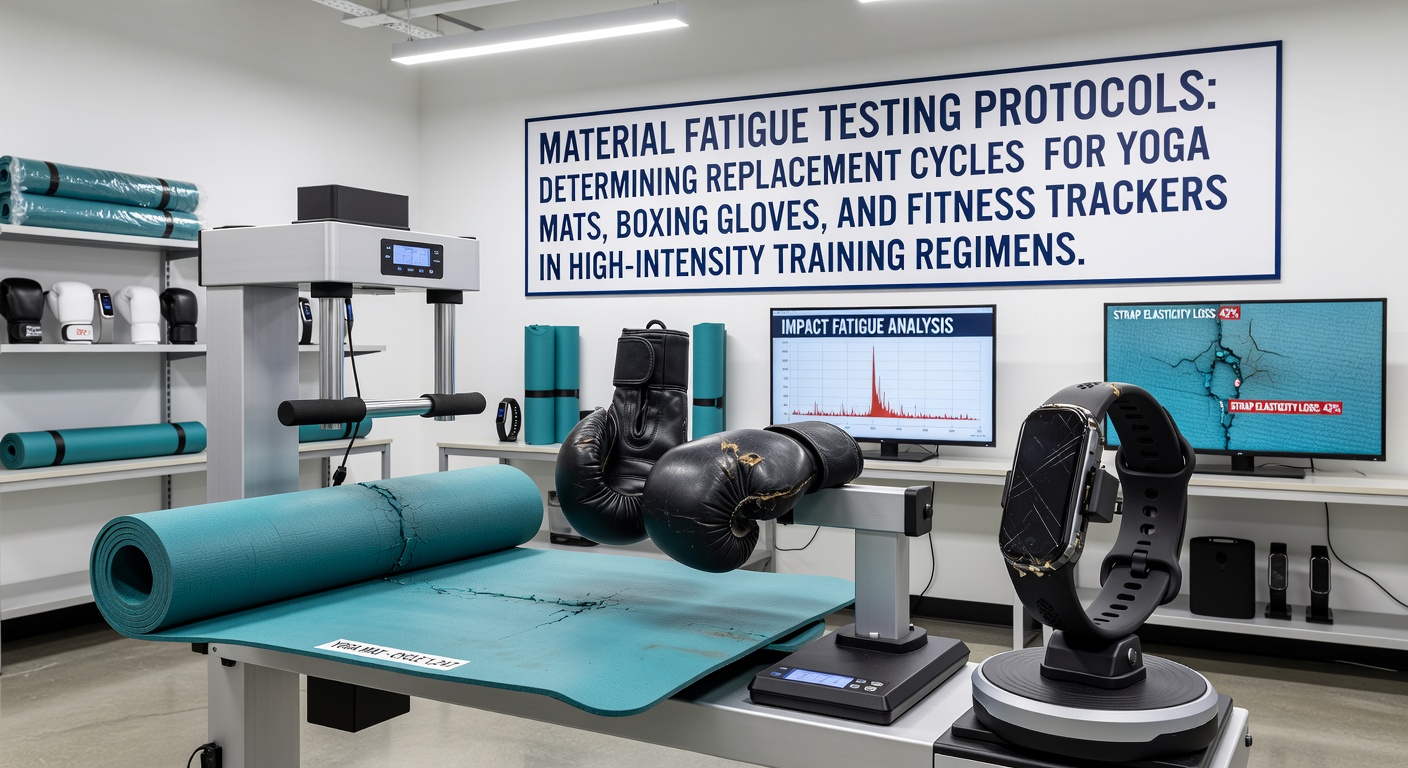 Protocols for assessing material fatigue have become central to establishing replacement schedules across yoga mats, boxing gloves, and fitness trackers used in demanding training environments. Engineers and materials scientists apply standardized cyclic loading tests that simulate thousands of repetitions, measuring degradation in elasticity, structural integrity, and sensor accuracy before visible failure occurs. These evaluations draw on data collected through controlled laboratory conditions that replicate the combined effects of sweat exposure, impact forces, and temperature fluctuations common in high-intensity sessions. Testing for yoga mats typically involves repeated compression and shear cycles that track foam recovery rates alongside surface abrasion resistance. Standards organizations document how mats lose up to 30 percent of their original cushioning after approximately 800 hours of intensive use when subjected to protocols aligned with ASTM guidelines. Replacement thresholds emerge once deflection measurements exceed predefined limits, prompting facilities to rotate stock rather than risk joint strain for users. Observers note that facilities following these metrics report fewer complaints about mat slippage during dynamic flows. Boxing gloves undergo impact attenuation testing that records energy absorption decline over successive strikes, often employing pendulum or drop-weight apparatus calibrated to mimic punch velocities. Research from the European Committee for Standardization indicates gloves reach critical padding compression after 500 to 700 rounds in heavy bag work, depending on construction layers and stitching patterns. Facilities integrate these findings into rotation schedules that prevent hand injuries linked to hardened foam. Data collected across multiple training centers shows consistent patterns where glove weight distribution shifts measurably before outer leather shows cracks. Fitness trackers add another dimension because their fatigue centers on both housing materials and internal electronics. Accelerated life testing subjects devices to vibration tables combined with humidity chambers that replicate sweat ingress and repetitive wrist flexion. Findings from studies conducted at the University of Melbourne reveal battery contact degradation and strap elasticity loss occurring around 12 to 18 months under daily high-intensity regimens, with sensor calibration drift appearing earlier in some models. Replacement cycles therefore account for both physical wear and data reliability thresholds. High-intensity programs combine these items simultaneously, creating cumulative stress profiles that individual tests must address. Protocols increasingly incorporate multi-product sequences where mats endure foot traffic while gloves absorb strikes and trackers log biometric spikes. June 2026 marks the rollout of updated ISO-aligned procedures that require synchronized testing environments reflecting these overlapping demands across equipment sets. Laboratories now report tighter correlations between individual component lifespans when evaluated in combined scenarios rather than isolation. Facilities adopt software dashboards that log usage hours against test-derived benchmarks, triggering alerts when any item approaches its cycle limit. This approach reduces unplanned downtime while maintaining consistent performance across training zones. Technicians perform periodic spot checks using portable durometers and strain gauges to validate laboratory predictions against real-world conditions. ASTM protocols provide the foundational methodology for impact and compression elements, whereas regional adaptations from Australian research institutions refine humidity and temperature variables specific to indoor facilities. Integration of these sources allows operators to tailor replacement intervals without overextending budgets on premature swaps. Material composition plays a direct role in determining how quickly fatigue accumulates. Natural rubber blends in mats demonstrate slower compression set compared with petroleum-based foams, yet they show higher abrasion rates under barefoot use. Boxing glove padding often combines ethylene-vinyl acetate with memory foam layers whose interface bonds weaken after repeated deformation. Tracker housings rely on polycarbonate blends that resist cracking but develop micro-fractures around button seals once flex cycles exceed manufacturer projections. Replacement decision frameworks now incorporate cost-benefit analyses tied directly to test outcomes. Centers calculate average cost per training hour for each category, factoring in injury risk reduction alongside equipment purchase prices. Patterns indicate that adhering to fatigue-based schedules extends overall program safety margins while optimizing inventory turnover.
Testing Equipment and Measurement Standards
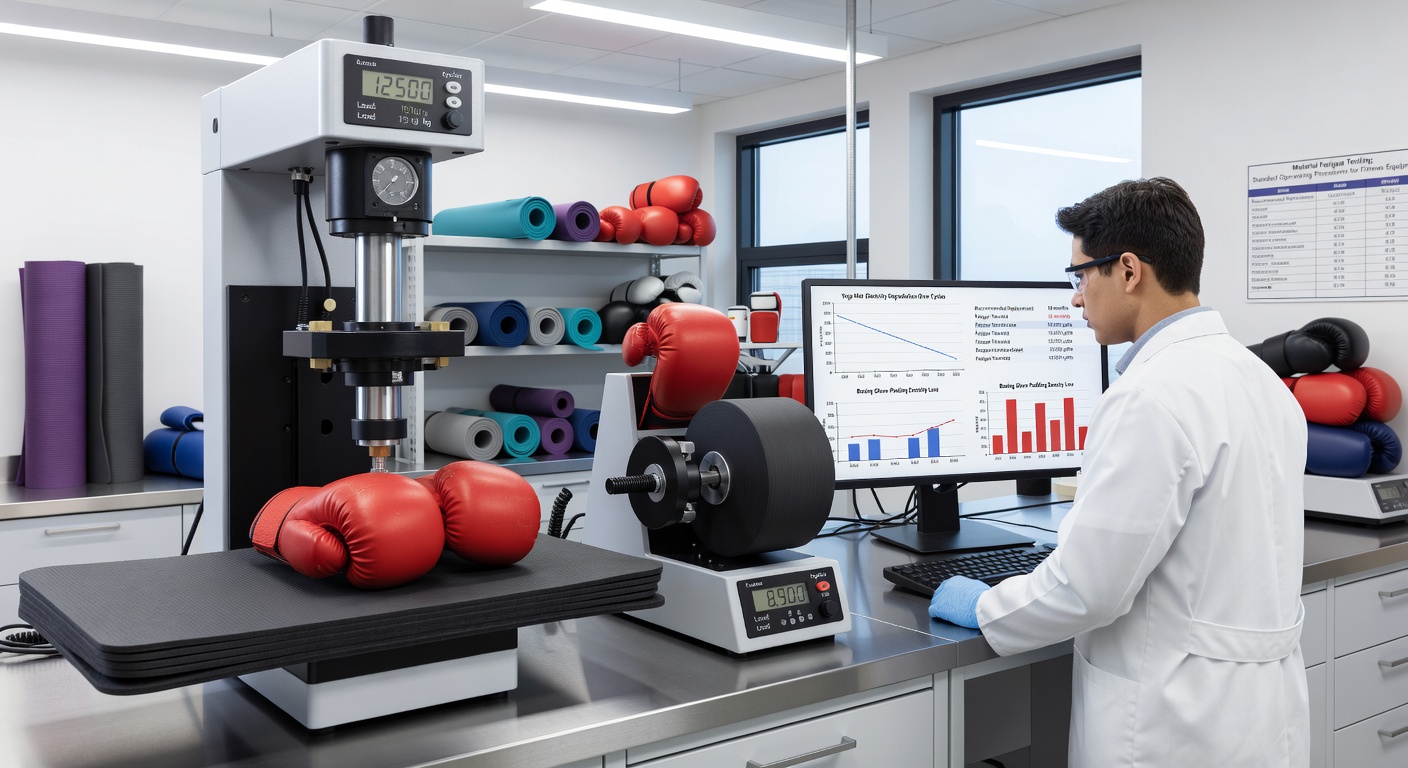
Specialized rigs apply sinusoidal loading patterns that accelerate aging without introducing artifacts from unrealistic force spikes. Strain gauges and laser displacement sensors capture incremental changes in thickness and rebound characteristics at intervals as fine as every 50 cycles. Calibration against reference specimens ensures repeatability across different laboratories, allowing facilities worldwide to compare results directly.
Integration Across Training Environments
High-volume studios combine multiple equipment categories within single sessions, making isolated replacement criteria insufficient. Cross-referencing data from mats, gloves, and trackers reveals interaction effects where degraded mat cushioning increases impact forces transmitted through gloves to tracker housings. Updated modeling software accounts for these linkages when generating unified replacement calendars.
Conclusion
Material fatigue testing supplies objective benchmarks that translate laboratory measurements into practical replacement cycles for yoga mats, boxing gloves, and fitness trackers. Facilities applying these protocols maintain equipment performance within safe operational ranges while aligning purchases with documented usage thresholds. Continued refinement of multi-product testing sequences supports consistent training conditions across high-intensity environments.