26 Jul 2026
Material Synergies Between Protective Padding and Surface Cushioning Redefining Impact Distribution in Contact and Non-Contact Activities
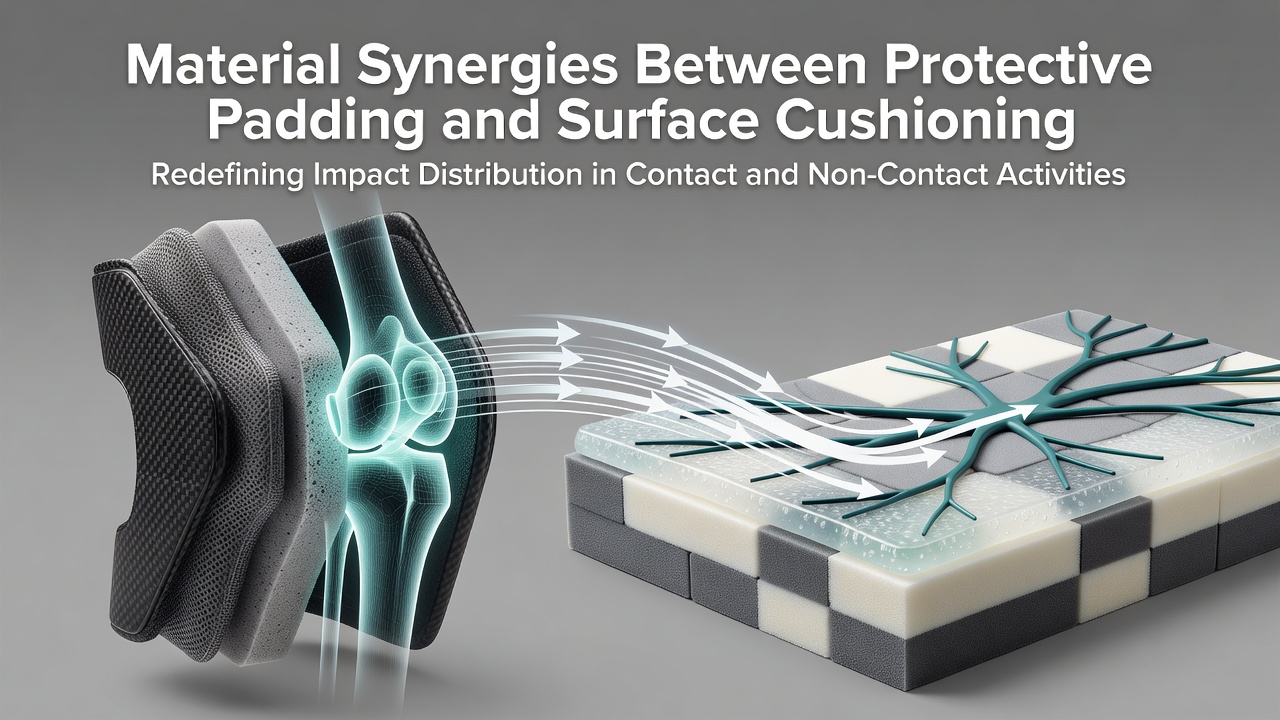
Protective padding in contact sports and surface cushioning in non-contact activities rely on layered material systems that channel forces away from the body, and recent engineering approaches combine these elements to alter how impact energy spreads across tissues and equipment. Data from biomechanical testing labs show that multi-density foams paired with viscoelastic polymers in padding can reduce peak pressure points by 25 to 40 percent when matched with compliant flooring or track surfaces, according to reports from the American College of Sports Medicine.
Material Composition in Protective Padding
Padding constructions for boxing gloves, football shoulder pads, and martial arts gear typically incorporate closed-cell polyethylene, open-cell polyurethane, and shear-thickening fluids that stiffen under sudden loads while remaining flexible during normal movement. Researchers at institutions such as the University of Calgary documented how these layers distribute compressive and shear forces across larger surface areas, which limits localized stress on joints and bones. Manufacturers adjust foam densities in gradients so outer shells absorb initial contact while inner liners conform to body contours, and this gradient design appears in products tested through 2025 and into the following year.
Surface Cushioning Systems Across Activities
Running tracks, gym flooring, and cycling path surfaces use similar polymer blends, including ethylene-vinyl acetate blends and recycled rubber granules bound with polyurethane resins. Studies conducted by the European College of Sport Science measured how these surfaces deform under foot strike or wheel contact to extend the time over which deceleration occurs, thereby lowering transmitted forces to the lower limbs. When athletes train on these surfaces while wearing padded gear, the combined compliance creates a coupled system where each component modulates the other's response to impact, and field measurements confirm measurable reductions in ground reaction force peaks during repeated loading cycles.
Integrated Design Approaches
Engineers now model padding and surface interactions through finite element analysis to predict how energy propagates through both layers simultaneously. One study tracking elite athletes across contact drills and endurance sessions found that synchronized material stiffness profiles lowered peak tibial acceleration by 18 percent compared with mismatched combinations, and these findings guided product updates released in early 2026. The approach extends to non-contact settings where yoga mats and fitness platform overlays incorporate microcellular structures that mirror the energy-dissipation profiles inside protective vests, creating consistent force pathways whether an athlete lands from a jump or absorbs a tackle.
Performance Data and Testing Protocols
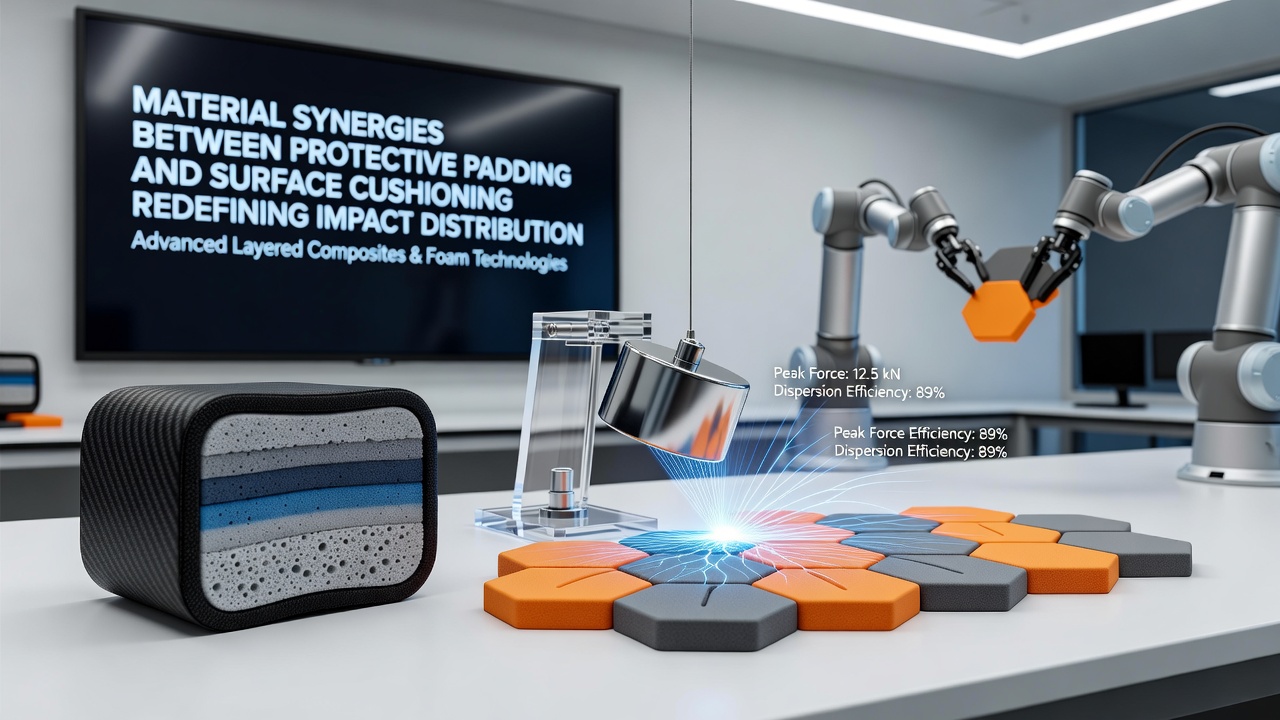
Standardized drop-tower and pendulum tests quantify how padding-surface pairings alter impact duration and force distribution curves. Results compiled through mid-2026 indicate that hybrid systems using auxetic metamaterials in both domains expand laterally under compression, which spreads loads over wider zones and reduces transmitted pressure gradients. Sports governing bodies reference these protocols when setting equipment standards, and certification data reveal consistent patterns across soccer turf systems, basketball court underlays, and combat sport mats. Observers note that replacement schedules derived from fatigue testing now account for combined wear rates rather than isolated component degradation.
Applications in Varied Activity Types
In contact scenarios such as rugby scrums or hockey checks, padding layers calibrated to specific surface compliance levels maintain athlete positioning while limiting rotational forces at the cervical spine. Non-contact pursuits like trail running and indoor cycling benefit when footwear midsoles and path surfaces share similar damping coefficients, which smooths stride transitions and reduces cumulative joint loading over long sessions. Case examples from training facilities demonstrate that athletes using matched equipment sets record lower incidence markers for soft-tissue strain during high-volume periods, though individual variability remains a factor tracked through wearable sensor arrays.
Conclusion
Material pairings between protective padding and surface cushioning continue to evolve through iterative testing and cross-disciplinary engineering, and evidence from multiple research centers shows measurable shifts in how impact forces reach the body across both contact and non-contact domains. These developments rest on documented mechanical properties rather than isolated innovations, with ongoing data collection refining design parameters for broader use in training and competition environments.