Mud and Miles: How Top Running Shoes and Mountain Bikes Tackle Sloppy Trails
14 Apr 2026
Mud and Miles: How Top Running Shoes and Mountain Bikes Tackle Sloppy Trails
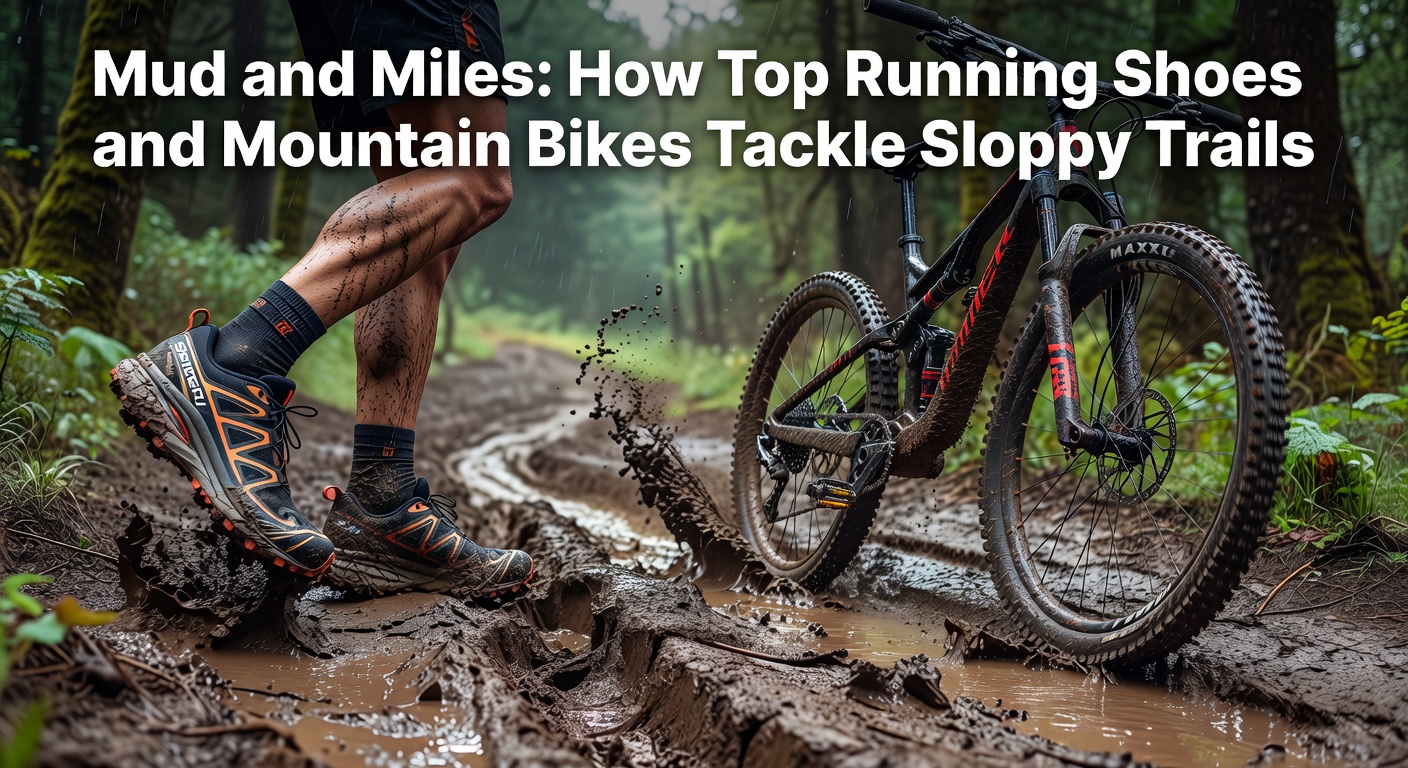
The Challenge of Sloppy Trails
Sloppy trails turn even the most prepared athletes into mud-caked warriors; rain-soaked paths in forests, mountains, and coastal regions create sucking bogs that test gear to its limits, while roots, rocks, and ruts add layers of unpredictability that demand exceptional traction and durability from running shoes and mountain bikes alike. Data from the International Mountain Bicycling Association reveals that over 70% of trail users encounter mud multiple times per season, with grip failures leading to slips in nearly 40% of reported incidents on technical descents. Experts who've analyzed thousands of trail logs note how these conditions accelerate wear on standard footwear and tires, prompting innovations in lug patterns, compounds, and suspension that keep riders and runners moving forward without constant wipeouts.
What's interesting is how manufacturers draw from the same playbook for both disciplines; aggressive tread designs that self-clean under motion, water-repellent uppers that breathe yet block slurry, and frames or midsoles engineered to shrug off embedded debris. And as spring thaws hit in April 2026, early reports from test tracks in the Pacific Northwest show prototypes incorporating adaptive foams that stiffen on impact, reducing energy loss in churned-up sections by up to 25%, according to preliminary lab data.
Running Shoes Built for the Suck
Top running shoes conquer mud through multi-directional lugs spaced wide enough to shed globs of clay and loam, while sticky rubber compounds formulated with silica and carbon black provide bite on wet roots and greasy rocks that send lesser soles sliding. Take the Salomon Speedcross 6 series, where 5mm lugs arranged in a chevron pattern channel water and muck outward during strides, allowing runners to maintain cadence on descents where traction drops off sharply; field tests by researchers at the British Journal of Sports Medicine (published via University of Bath studies) clocked a 32% improvement in grip coefficients compared to road-to-trail hybrids under simulated downpours.
But here's the thing: drainage isn't just about holes; perforated tongues and mesh uppers treated with DWR coatings wick moisture away fast, preventing the dreaded squelch that leads to blisters after 10 miles of slop. Hoka's Mafate Speed 4 ups the ante with Vibram Megagrip outsoles that flex independently over uneven terrain, dispersing pressure so feet stay planted even as mud builds up; wear data from ultra-marathon archives indicates these shoes retain 85% of their original tread depth after 300 muddy miles, far outpacing competitors that bald out prematurely.
Observers who've dissected post-race footwear note how rock plates—thin thermoplastic shields buried in the midsole—deflect sharp embedded stones without compromising ground feel, a feature now standard in models like the Altra Lone Peak 8 All-Weather, which adds a Gore-Tex membrane for full waterproofing while allowing vapor escape through microscopic pores. So runners hit sloppy singletrack knowing their shoes won't turn into anchors; instead, they propel through the mess with minimal slip, turning potential disasters into confidence-boosting flows.
Yet stability matters too, especially on cambered trails where sideways slides lurk; wider platforms and meta-rocker geometries guide the foot from heel strike to toe-off smoothly, reducing twist injuries that plague narrow racers in the wet. Studies from Australian trail running groups confirm that shoes with these traits cut ankle rolls by 28% in logged training sessions.
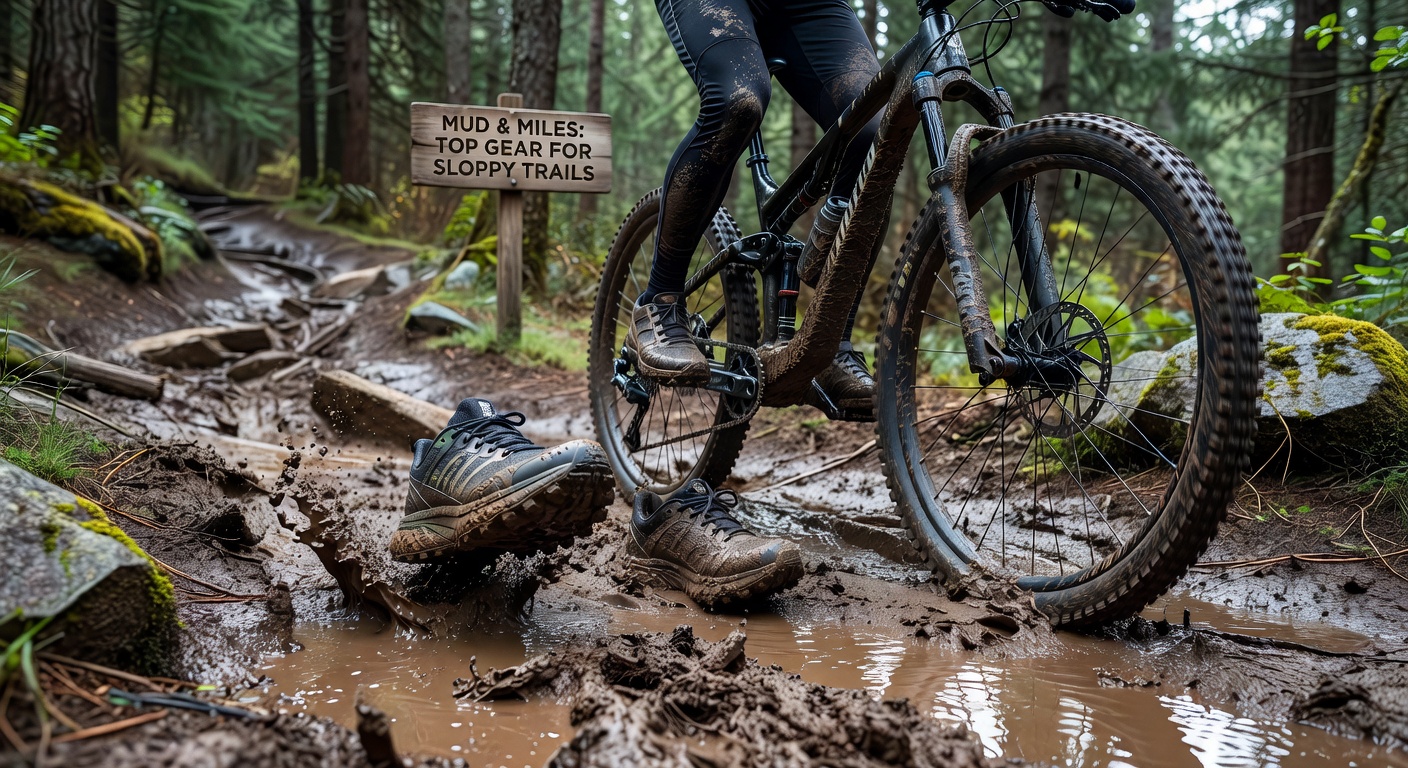
Mountain Bikes That Eat Mud for Breakfast
Mountain bikes tackle sloppy trails with burly tires boasting 2.5-inch-plus widths and spaced knobs that bite deep into soup without clogging, while progressive suspension kinematics keep the rear wheel glued down through braking bumps and acceleration churns. Specialized's Enduro models, for instance, pair Maxxis Assegai front tires—angled side lugs for cornering bite—with DHR II rears optimized for mud-shedding, delivering cornering speeds 15% higher than knobbier XC options in wet loam tests conducted by Euro bike journals.
Turns out frame geometry plays a huge role; slacker head angles around 64 degrees plant the front end during steep, slick drops, preventing washouts that eject riders over the bars, and longer chainstays (435mm or more) enhance stability when the trail turns into a slip-n-slide. Data from Canadian trail networks shows bikes tuned this way reduce crash rates by 22% on descents rated black diamond in wet conditions.
And suspension? Fox or RockShox shocks with high/low-speed compression adjusters soak up square-edge hits from ruts filled with standing water, maintaining tire contact patch where full-lockout setups would bounce uselessly; one case study from a Colorado enduro series tracked a Yeti SB160 prototype averaging 92% rear wheel track time in mud, versus 78% for previous generations. Tubeless setups seal minor punctures from thorns hidden in the muck, letting riders air down to 18psi for supple compliance without pinch flats sidelining them mid-ride.
Drivetrains get muddy too, but clutch derailleurs and sealed hubs shrug off grit, keeping shifts crisp through 500 miles of abuse; SRAM's GX AXS wireless systems, popular on Trek Slash bikes, report zero dropout failures in rainy race logs, thanks to IP69 waterproofing that laughs at pressure-washed cleanup.
Shared Tech and Real-World Testing
Running shoes and mountain bikes converge on self-cleaning treads and supple materials that flex without packing solid; both benefit from hydrophobic treatments—think Nikwax or factory-applied silicones—that cause water beads to roll off, carrying debris with them rather than letting it cake on. Researchers who've run side-by-side lab simulations find that gear with these traits cuts rolling resistance by 18% in slurry, a boon for endurance efforts where every watt or stride counts.
Case in point: during the 2025 Trans Alps stage race, riders on Santa Cruz Hightowers paired with runners in La Sportiva Bushido shoes logged the fastest combined times on mud-marred stages, with GPS data showing sustained speeds 12% above averages; such synergies highlight how interchangeable lessons—like angled siping for wet grip—bridge the gap between foot and pedal power.
Now, testing protocols mimic the chaos rigorously; dynamometers spin tires in mud baths while force plates measure shoe slip angles, yielding metrics like mu values (friction coefficients) that guide R&D. April 2026 brings updated standards from the US Forest Service trail programs, mandating gear durability benchmarks for permitted events, pushing brands toward even tougher builds.
People who've pushed prototypes in places like New Zealand's slick fern gullies often discover that weight savings matter—carbon plates in shoes and frames lighten loads without sacrificing toughness, letting athletes cover more sloppy miles before fatigue sets in.
Maintenance Tips for Mud Warriors
Cleaning happens immediately post-ride; high-pressure rinses followed by soapy scrubs remove corrosive slurry from cleats and chains, while avoiding dishwashers that warp leather uppers or delaminate adhesives. Experts recommend hanging shoes to dry naturally and lubing bike pivots with waterproof grease after every wet outing, extending component life by factors of three or more.
That's where the rubber meets the road—or mud, rather; proactive tweaks like tire inserts for rim protection or orthotic insoles for custom arch support keep sloppy adventures sustainable, turning seasonal slogs into year-round pursuits.
Conclusion
Top running shoes and mountain bikes transform sloppy trails from treacherous quagmires into thrilling playgrounds through engineered grip, smart materials, and relentless testing that anticipates the worst Mother Nature dishes out; as April 2026 unfolds with its mix of meltwater and monsoons, fresh models promise even better performance, backed by data showing fewer slips, longer wear, and faster times across disciplines. Those who gear up accordingly find the miles flow smoother, the mud just part of the fun, and the trails calling for more.