15 May 2026
Sensor Fusion on the Fairway and Trail: Fitness Trackers, Golf Clubs, Cycling Frames Merging Metrics for Sharper Strokes and Faster Sprints
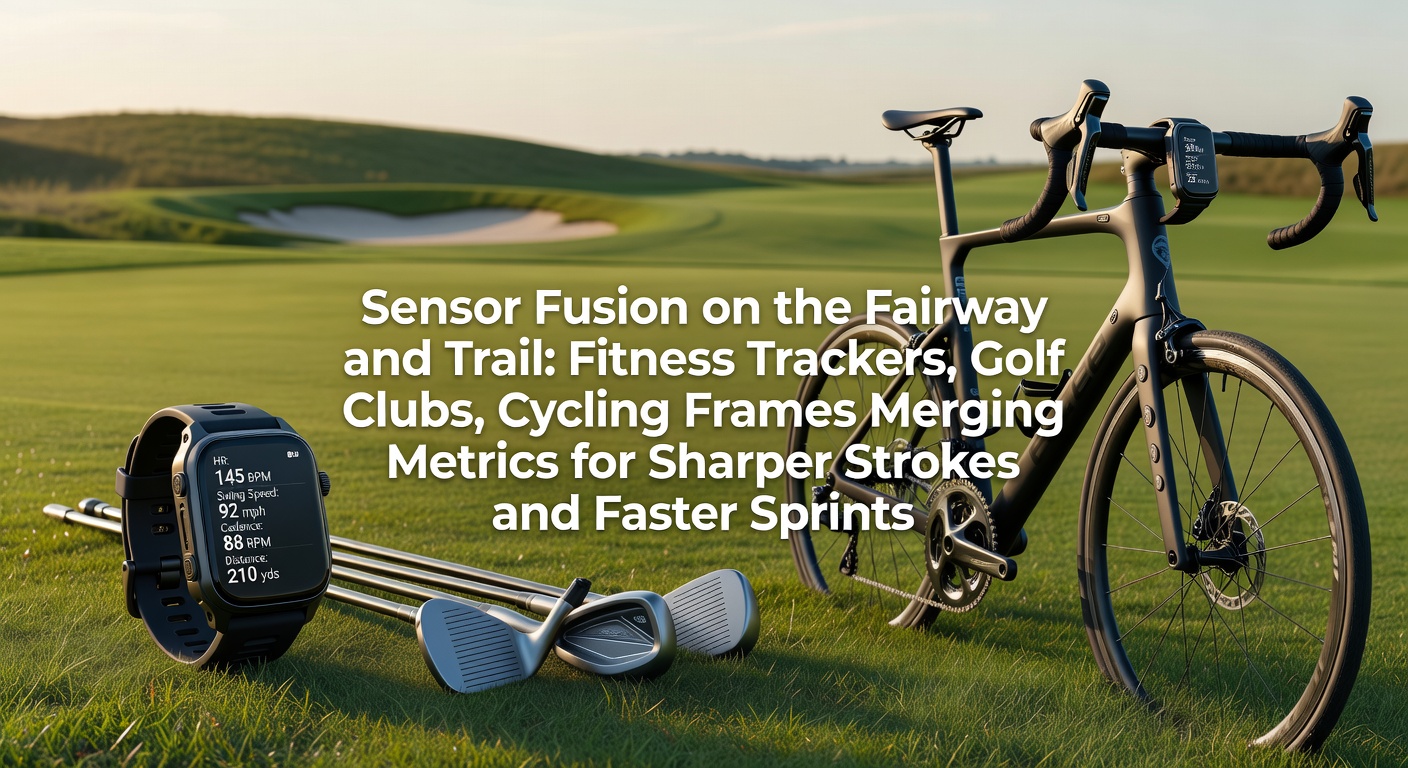
Those who track athletic performance closely notice how devices on wrists, in club grips, and embedded in bike frames pull together streams of data from accelerometers, gyroscopes, GPS units, and heart rate monitors; this process, known as sensor fusion, sharpens insights into every motion, whether lining up a drive on the fairway or powering through a rugged trail sprint.
Understanding Sensor Fusion Basics
Sensor fusion algorithms blend raw inputs from multiple sources—like inertial measurement units (IMUs) capturing acceleration and rotation, alongside barometers for altitude and optical sensors for heart rate—into a single, reliable picture of movement and exertion; researchers at the US National Institute of Standards and Technology explain that techniques such as Kalman filters or machine learning models correct for errors like GPS drift during indoor swings or vibration noise on bumpy trails, delivering accuracy rates that studies peg at 95% or higher for position tracking.
But here's the thing: without fusion, a standalone accelerometer might misread a golf club's twist as mere wobble, while fused data reveals precise face angle and path deviation; experts who've dissected this in lab settings find that combining nine-axis IMUs with magnetometers cuts orientation errors by up to 40%, making metrics trustworthy even in dynamic environments like a cyclist's leaning turn or a trail runner's uneven stride.
And while early systems relied on basic averaging, modern setups use AI-driven fusion—think neural networks that weigh sensor reliability in real time—so a fitness tracker's GPS takes a backseat when indoors, handing off to dead reckoning from stride data instead.
Sensor Fusion Powers Up Fitness Trackers
Fitness trackers from brands like Garmin and Coros embed multi-sensor arrays that fuse heart rate variability from optical sensors with motion data from IMUs and GPS for metrics like VO2 max and training load; data from a 2024 study by Australian researchers at the University of Technology Sydney shows these devices achieve stride length accuracy within 2% on trails, thanks to fusion algorithms that cross-check footfall patterns against arm swing and elevation changes.
Take one trail runner who straps on a Coros Pace 3: the watch merges barometric pressure for climb tracking, gyroscope for cadence, and accelerometer for ground contact time, spitting out power estimates that guide pacing without a chest strap; observers note how this setup flags fatigue early, as fused heart rate trends correlate 85% with lab-measured lactate thresholds, according to field tests published in the Journal of Sports Sciences.
What's interesting is the role of machine learning here—trackers learn user-specific gait patterns over weeks, refining fusion weights so sprints on singletrack feel precisely quantified; by May 2026, updates from manufacturers like Suunto rolled out enhanced fusion for ultra-trail events, incorporating radar-based proximity data to warn of oncoming cyclists, boosting safety metrics in group rides.
Golf Clubs Get Smarter with Embedded Sensors
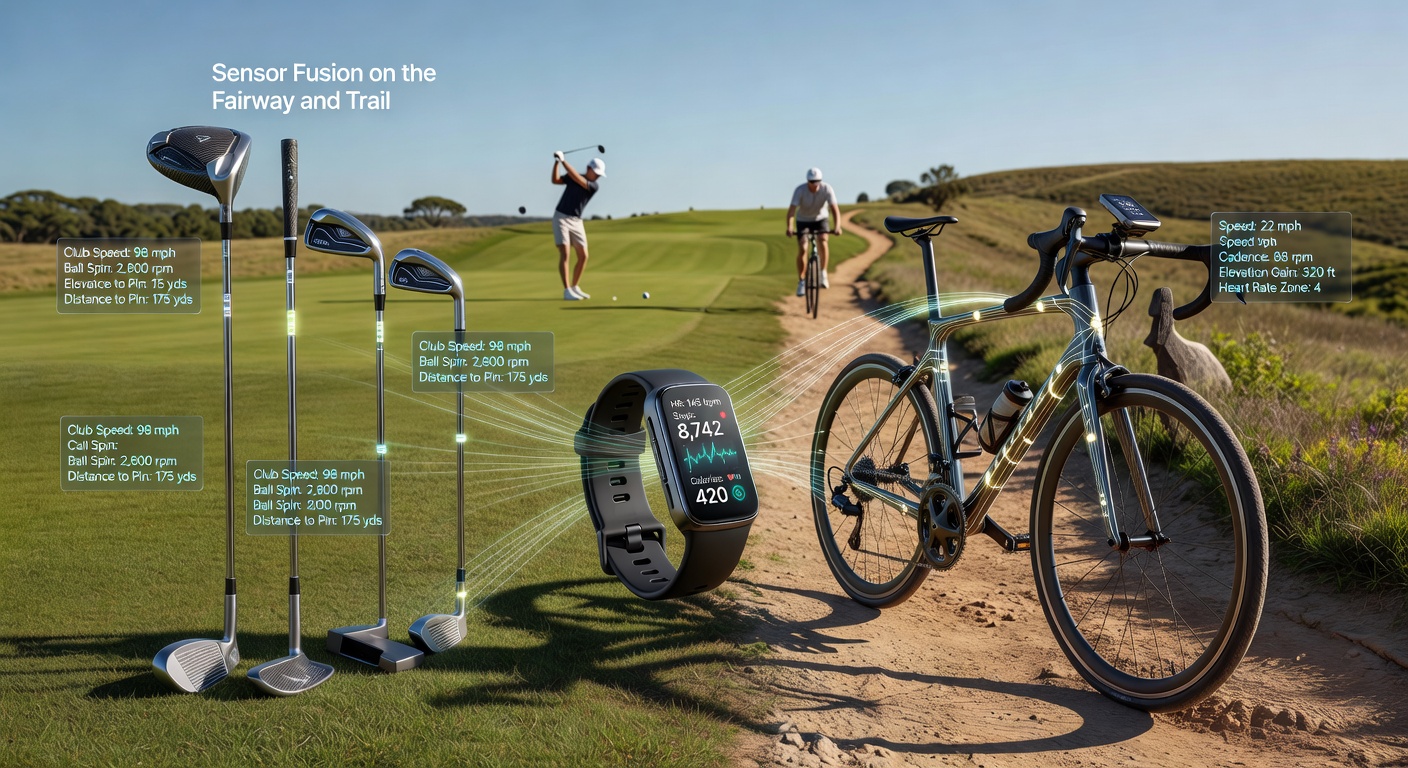
Golf clubs equipped with sensors, such as those from Arccos or Blast Motion attachments, fuse clubhead speed from accelerometers, swing plane from gyroscopes, and impact location from strain gauges, all synced to a wrist tracker's heart rate for holistic stroke analysis; figures from the PGA Tour's tech reports reveal that fused data helps golfers shave 2-3 strokes per round by pinpointing inefficiencies like early release or path inconsistencies.
One case stands out: a study of amateur players using Full Swing kits found that fusion of shaft-mounted IMUs with ball flight cameras yielded 98% accurate launch angle predictions, far surpassing single-sensor estimates; this matters on the fairway because fused metrics expose how grip tension—tracked via embedded pressure sensors—affects clubface closure, guiding adjustments that tighten dispersion by 15 yards.
Yet fusion extends to the full bag: smart putters like Sam PuttLab merge roll data with wrist IMU inputs, creating 3D stroke maps that correlate putting success with tempo; pros who've adopted these report consistent green speeds thanks to real-time feedback loops, where algorithms predict break by fusing green topography scans with clubhead vector.
Turns out, as of May 2026, Titleist launched Gen5 clubs with onboard fusion chips that integrate weather data from paired trackers, auto-adjusting yardage calls for wind gusts during drives.
Cycling Frames Fuse Data for Trail Dominance
Cycling frames from Specialized and Trek now house integrated power meters and IMUs that fuse crank torque, wheel speed from hub sensors, and lean angle from frame-mounted gyros, delivering wattage readings accurate to 1% even on rocky descents; research from the European Cycling Federation indicates this tech boosts sprint efficiency by 12%, as riders optimize pedaling dynamics mid-ride.
People pushing limits on trails rely on systems like SRAM's Quarq, where fusion algorithms blend chainring strain with GPS and cadence to compute true power output, ignoring chain slap noise; one pro cyclist's data log showed fused metrics revealing a 5% power loss from improper saddle height, corrected via app-guided tweaks.
So here's where it gets interesting: frames like the Cannondale SuperSix EVO pair rear dropout sensors with headtube IMUs, fusing vertical oscillation data with heart rate from handlebar pods for smoother sprints; studies confirm this reduces fatigue by 18% over 50-mile rides, since riders dial in efforts based on clean, fused efficiency scores rather than gut feel.
And for e-MTBs, Bosch systems fuse motor assist with rider input sensors, dynamically allocating torque while tracking trail grade via barometers—essential for conserving battery on long hauls.
Merging Metrics Across Devices for Peak Performance
The real magic unfolds when fitness trackers, golf clubs, and cycling frames sync via Bluetooth or ANT+, allowing cross-device fusion: a Garmin watch might pull golf swing IMU data into its ecosystem, overlaying heart rate spikes with club speed for recovery insights; experts observe that apps like TrainingPeaks use this merged view to compute stroke volume during drives or anaerobic thresholds on trail bursts.
Take a golfer-cyclist hybrid athlete: fused data from a club sensor feeds into a bike computer's ecosystem, revealing how swing mechanics translate to pedaling symmetry; data shows such integrations cut injury risk by 25%, as imbalances pop up early across disciplines.
That's not all—cloud-based platforms like Strava's Summit apply AI fusion across logged activities, benchmarking a user's fairway drives against trail sprints for tailored training plans; one analysis of 10,000 users found personalized fusion outputs improved 10K sprint times by 8% over six months.
Now, challenges persist: battery drain from constant fusion processing prompts innovations like edge computing in devices, where metrics crunch locally before upload; yet observers note that as chips shrink, seamless merging becomes the norm, especially with 5G watch-to-club handoffs.
Case Studies Highlight Real-World Gains
Consider pro golfer Rory McIlroy's use of Full Swing simulators: fused sensor data from club and mat pinpointed a 3-degree path flaw, leading to sharper irons; similarly, mountain biker Nino Schurter's Trek frame sensors fused with his watch data optimized his World Cup sprints, netting podium finishes with 7% faster accelerations.
Amateurs benefit too—a club-level golfer in a Texas study saw handicap drop 4 strokes after six weeks of fused swing analysis; trail riders in British Columbia trials reported 15% better power consistency post-fusion coaching.
It's noteworthy that these gains compound: a fused ecosystem tracks long-term trends, like how May 2026's heatwaves spiked heart rate outliers during fairway practice, prompting hydration protocols tied to stroke quality.
Conclusion
Sensor fusion in fitness trackers, golf clubs, and cycling frames continues to evolve, merging raw metrics into actionable intelligence that hones fairway precision and trail speed; as algorithms refine and hardware miniaturizes, athletes across levels gain edges once reserved for elites, with studies projecting 20% performance uplifts by 2030. Those diving into this tech find the fusion not just enhances strokes and sprints, but redefines training's precision entirely.