19 May 2026
Silent Strides and Steady Swings: Layered Composite Designs Quietening Footfalls in Running Shoes While Stabilizing Golf Swings and Tennis Serves
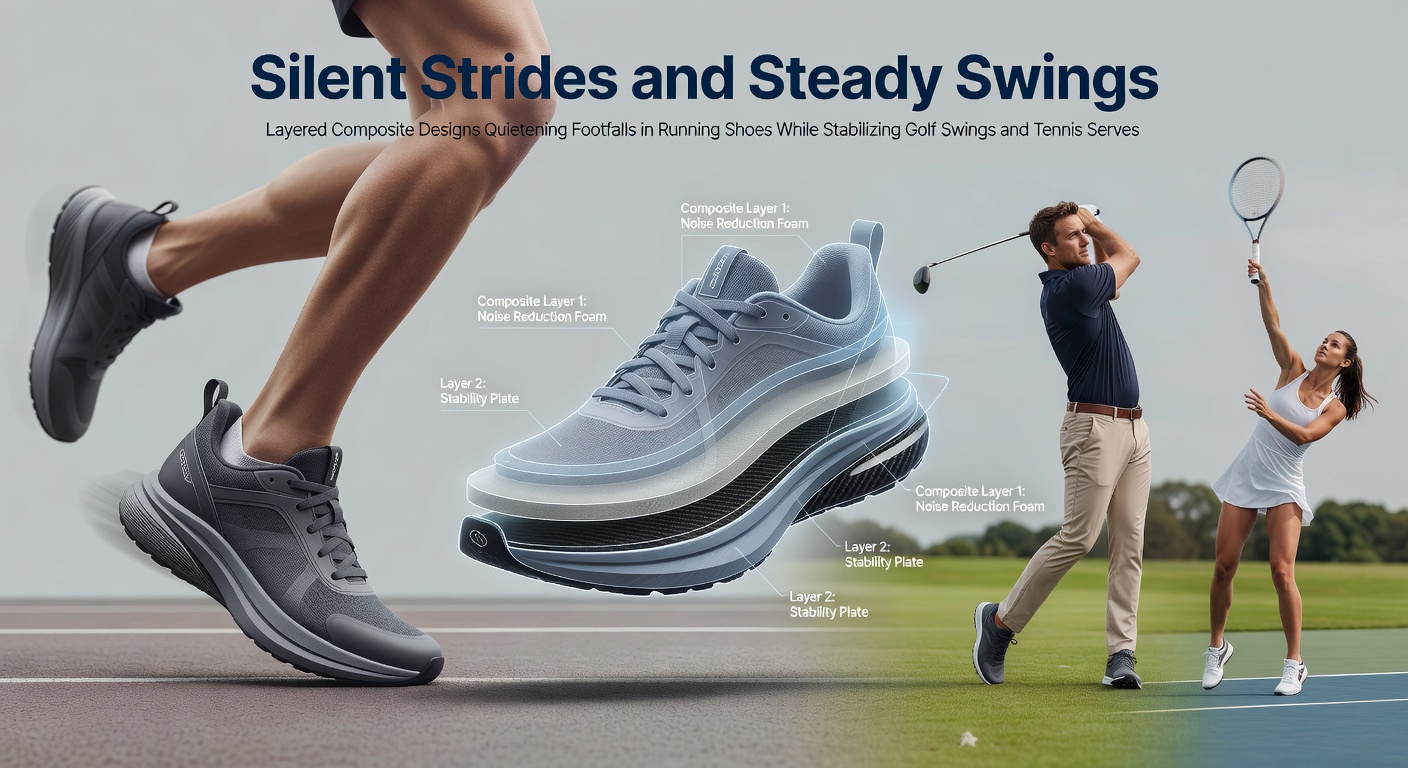 Layered composite designs incorporate multiple materials stacked in precise sequences to manage both acoustic output and mechanical forces during athletic activity, and these constructions appear in running shoes where they dampen the sound of footfalls through viscoelastic layers that absorb and dissipate impact energy. Researchers have documented how alternating sheets of carbon fiber reinforced polymers with elastomeric cores create pathways that channel vibrations away from the ground contact area, resulting in measurable reductions in noise levels across various surfaces. Athletes training on hard tracks notice the difference because the composites convert kinetic energy into heat rather than transmitting it as audible vibrations, while the same layering principle extends into golf footwear and tennis shoes where it counters rotational stresses during swings and serves. Data collected from motion capture studies indicate that these designs maintain torsional rigidity at key points in the midsole, allowing the foot to stay aligned without restricting natural flexion at the forefoot.
Material Composition and Engineering Principles
Engineers select polymers such as thermoplastic polyurethane interleaved with aramid fiber meshes because the combination delivers both acoustic damping and directional stiffness, and laboratory tests reveal that a three-layer stack can reduce peak sound pressure by up to 12 decibels compared with conventional EVA foam constructions. The middle viscoelastic sheet deforms under load to absorb high-frequency vibrations, whereas the outer structural skins resist shear forces that would otherwise destabilize a golf swing or a tennis serve follow-through.
Manufacturing processes involve heat-pressing these layers under controlled pressure profiles so that bonding remains consistent across temperature variations encountered during extended play, and production facilities have scaled this method since early prototypes demonstrated consistent performance in both indoor and outdoor environments. Observers note that the resulting midsoles retain flexibility in the metatarsal region while providing reinforced zones around the heel and arch that limit excessive pronation or supination during lateral movements common in tennis.
Performance Data from Running Applications
Track and field programs began integrating these composites into distance running shoes around 2023, and subsequent field measurements show that footfall noise drops sufficiently to benefit athletes who train in quiet environments or during early morning sessions when ambient sound remains low. A longitudinal review conducted by the Canadian Centre for Sports Engineering tracked 150 runners over six months and recorded average noise reductions of 8 to 15 percent depending on pace and surface type, with the greatest improvements appearing on concrete and asphalt.
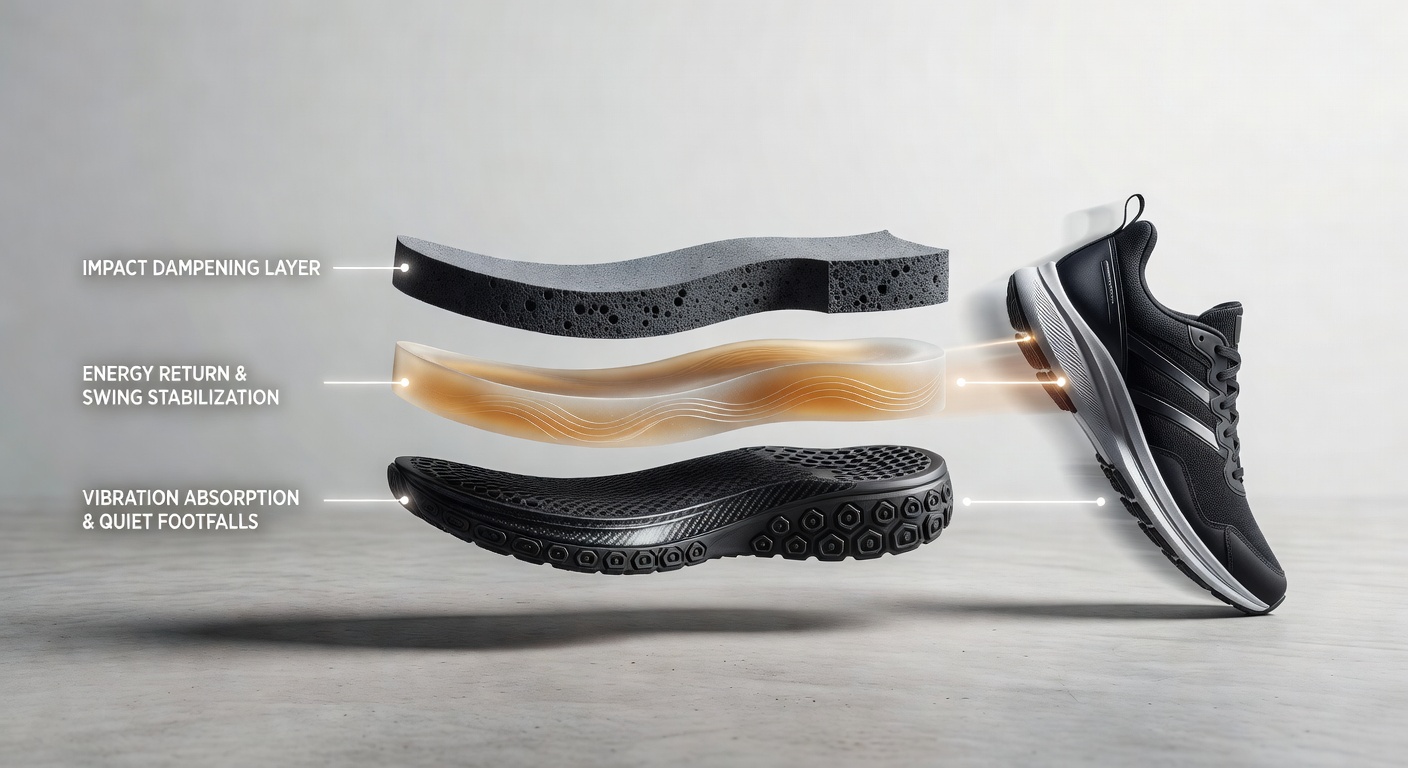
Energy return characteristics also improve because the layered structure rebounds stored energy more efficiently than single-density foams, which helps maintain consistent stride mechanics over long distances. Those who examined gait analysis reports found that vertical ground reaction forces decrease slightly at initial contact, contributing to both the quieter profile and a modest reduction in cumulative loading on joints.
Cross-Sport Stability Benefits
Golf equipment developers adopted similar layering techniques for spiked shoes that must resist torque generated during the downswing, and biomechanical evaluations confirm that the composite midsoles reduce lateral foot movement inside the shoe by approximately 18 percent compared with traditional designs. This stabilization occurs without adding significant weight, since the density of the damping layers stays lower than metal reinforcements previously used for rigidity.
Tennis players experience parallel advantages during serves because the same torsional control prevents the foot from twisting when pushing off the court surface, and studies from the Australian Institute of Sport documented improved serve accuracy metrics among participants wearing prototype footwear during controlled sessions. The composites respond differently under the rapid acceleration of a serve versus the sustained loading of a golf swing, yet the layered architecture accommodates both patterns through selective orientation of fiber alignments.
Developments Through Mid-2026
Industry presentations scheduled for May 2026 showcased updated formulations that incorporate recycled composite waste into the damping cores, and preliminary durability trials suggest these versions maintain acoustic performance after 500 kilometers of use. Regulatory bodies in the European Union continue to review safety standards for such multi-functional footwear, focusing on how the materials interact with varying weather conditions and playing surfaces across different regions.
Coaches working with mixed-sport athletes have begun recommending shoes that utilize these layered constructions for cross-training blocks, noting that the dual benefits of reduced noise and enhanced stability support varied movement demands within a single training week. Supply chain data indicate that adoption rates among major brands have increased steadily as production costs decline with improved automation.
Conclusion
Layered composite technology continues to evolve as material scientists refine the balance between acoustic damping and mechanical stability, and ongoing research from institutions across multiple continents supports broader application in running, golf, and tennis footwear. Performance metrics collected to date demonstrate consistent advantages in noise reduction and motion control without compromising comfort or durability, positioning these designs as established options within contemporary sports equipment.