12 Jun 2026
Tracing Vibration Control Engineering from Racket Frames Through Glove Padding to Bike Handlebar Designs for Reduced Joint Stress in Repetitive Training Cycles
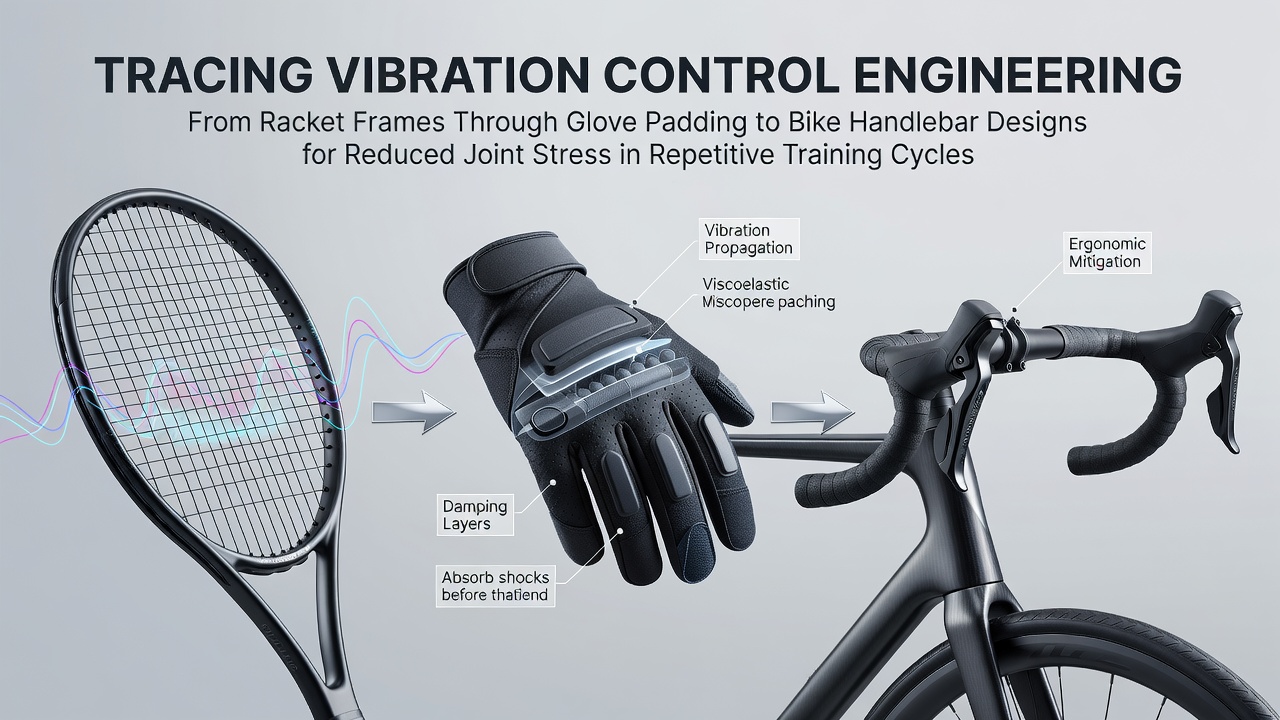
Engineers have traced the development of vibration control across racket frames, glove padding, and bike handlebar designs as athletes seek ways to manage joint stress during repetitive training cycles that involve thousands of impacts per session. Data from sports biomechanics labs shows that uncontrolled vibrations transmit through equipment directly into wrists, elbows, and shoulders, which increases fatigue and raises injury risk over time.
Racket Frame Innovations Lead Early Damping Efforts
Composite materials entered racket production in the 1970s when manufacturers replaced wood with graphite and fiberglass layers that absorbed high-frequency shocks better than solid frames. Researchers at institutions including the University of Calgary documented how adding viscoelastic inserts between carbon plies reduced peak vibration amplitudes by measurable percentages during ball impact tests. These early designs established core principles that later migrated to other equipment categories because the same energy transfer patterns appeared in striking and gripping motions across different sports.
Padding Technologies Transfer from Gloves to Handlebars
Boxing glove construction adopted multi-density foams in the 1980s after studies measured force distribution across the hand during repeated punches, and manufacturers placed softer outer layers over firmer inner cores to dissipate energy before it reached the wrist. Similar foam layering appeared in bike handlebar tape and grip systems once cycling teams requested reduced numbness during long training rides on rough surfaces. The transition happened because engineers recognized that repetitive micro-impacts in both activities follow comparable frequency ranges, so material solutions developed for one context transferred with minimal modification.
Integrated Design Approaches in Modern Equipment
Current bike handlebar designs incorporate gel inserts and carbon fiber layups tuned to specific resonance frequencies, while racket frames now feature similar internal damping chambers filled with polymer gels. Glove padding meanwhile uses segmented layers that allow controlled flex without transmitting full shock waves. Studies conducted through 2025 and into mid-2026 at facilities such as the Australian Institute of Sport have tracked how these layered systems lower measured joint torque values during standardized repetitive motion protocols. Observers note that athletes training across multiple disciplines benefit when equipment shares compatible damping characteristics because the body adapts to consistent vibration profiles rather than adjusting to abrupt changes between sessions.
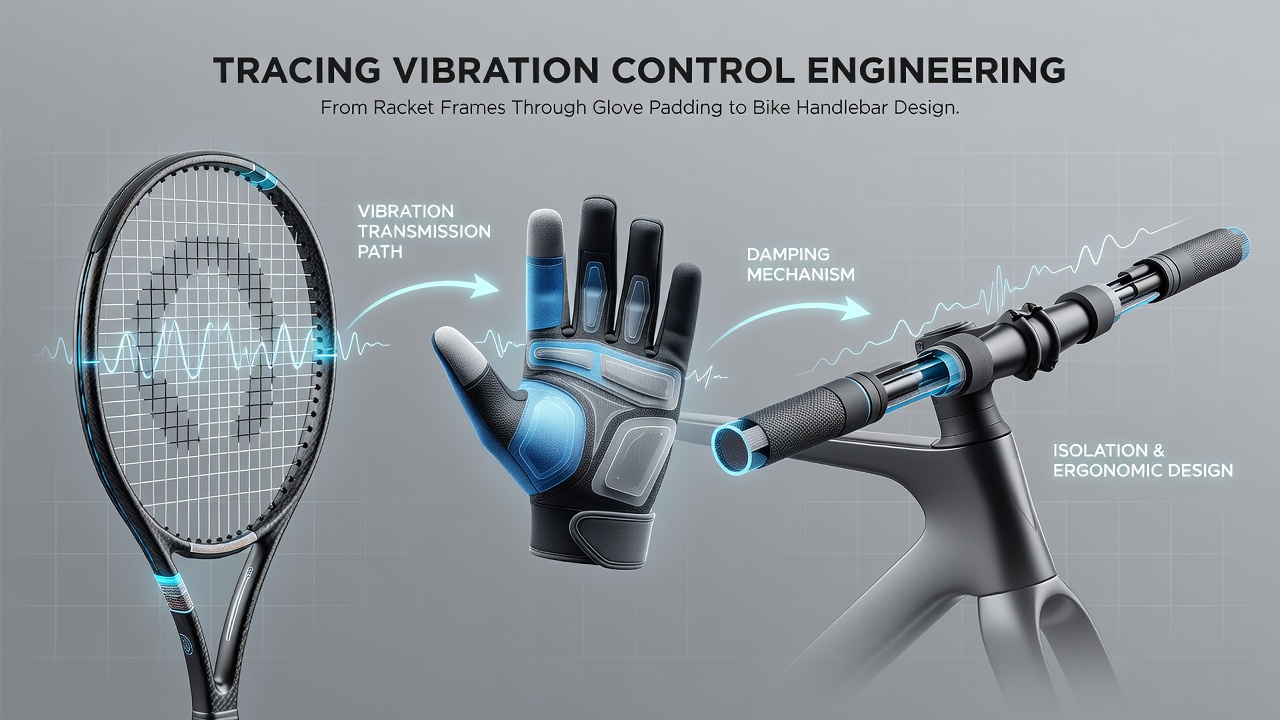
One research group compared force plate readings from athletes using traditional versus damped equipment and recorded lower peak accelerations at the elbow joint when using updated designs. The findings align with earlier work on racket frames where modal analysis identified specific frequencies that most readily travel through the arm. Manufacturers now apply finite element modeling to predict how small changes in layer thickness or material stiffness affect the entire chain from contact point to joint.
Measurement Standards and Testing Protocols
Standardized testing rigs simulate repetitive cycles by delivering controlled impacts at rates matching typical training volumes, and sensors placed along the arm capture transmitted vibrations at multiple points. European research networks have published protocols that specify frequency ranges and amplitude thresholds relevant to racket sports, combat training, and cycling, which allows direct comparison across equipment types. These shared methods reveal that effective damping requires attention to both high-frequency buzz and lower-frequency jolts because each affects different tissues and joint structures.
Material Science Developments Supporting Cross-Application
Advanced polymers and constrained-layer damping sheets originally refined for rackets now appear in glove wrist supports and handlebar cores, while newer elastomers developed for cycling grips find their way back into updated racket handles. The iterative exchange continues because each sport presents slightly different loading patterns yet shares the fundamental need to interrupt vibration paths before they reach sensitive joint capsules. Data collected through 2026 indicates that combined use of these technologies across disciplines correlates with extended training consistency for athletes who rotate between racket work, striking drills, and endurance cycling.
Conclusion
Engineering progress in vibration control now follows traceable pathways that began with racket frame composites, moved through glove padding refinements, and reached bike handlebar systems, with each stage building on measured performance data rather than isolated invention. Continued testing and material updates keep these connections active as training volumes remain high across sports that involve repetitive upper-body impacts.