19 Jul 2026
Weather-responsive polymers finding applications in cycling components and fitness monitoring devices for consistent performance
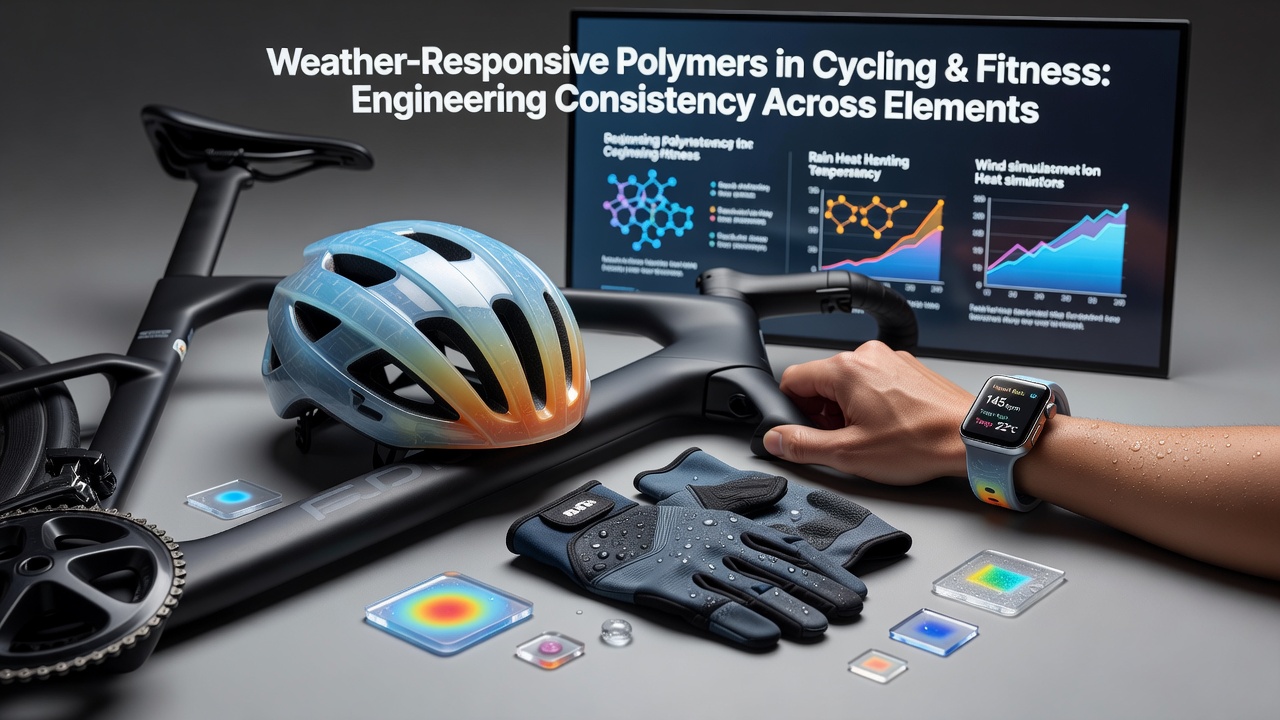
Weather-responsive polymers adjust their molecular structure in response to temperature shifts, humidity levels, and UV exposure, which allows cycling components such as handlebar grips, tire sidewalls, and brake pads to retain flexibility and traction across seasonal changes, while fitness monitoring devices use similar materials in wristbands and sensor housings to preserve signal accuracy and comfort during extended outdoor sessions.
Polymer mechanisms and performance stability
These materials incorporate phase-changing additives and cross-linked networks that expand or contract at specific thresholds, so researchers at institutions including the Fraunhofer Institute for Applied Polymer Research documented how certain copolymers maintain consistent durometer ratings between 5°C and 35°C, preventing the hardening that typically reduces grip on cold mornings or the softening that occurs in summer heat. Data from field trials conducted through mid-2026 indicate that components treated with these polymers show up to 40 percent less variation in friction coefficients compared with standard elastomers when tested across wet and dry conditions.
Cycling component integrations
Manufacturers embed weather-responsive layers into drop-bar tapes and saddle rails, where the polymers respond to rider perspiration and ambient moisture by increasing surface tackiness without requiring additional chemical treatments. In July 2026 several European frame builders began offering fork lowers and seat stays coated with humidity-triggered elastomers that stiffen slightly during rain to reduce flex while returning to baseline compliance once conditions dry, and independent testing labs reported that these coatings extended component lifespan by limiting micro-cracking caused by repeated thermal cycling. Tire manufacturers have also begun experimenting with sidewall inserts that soften under high heat to improve cornering compliance on hot pavement yet stiffen when temperatures drop, thereby preserving rolling resistance targets set during laboratory calibration.
Fitness monitoring device adaptations
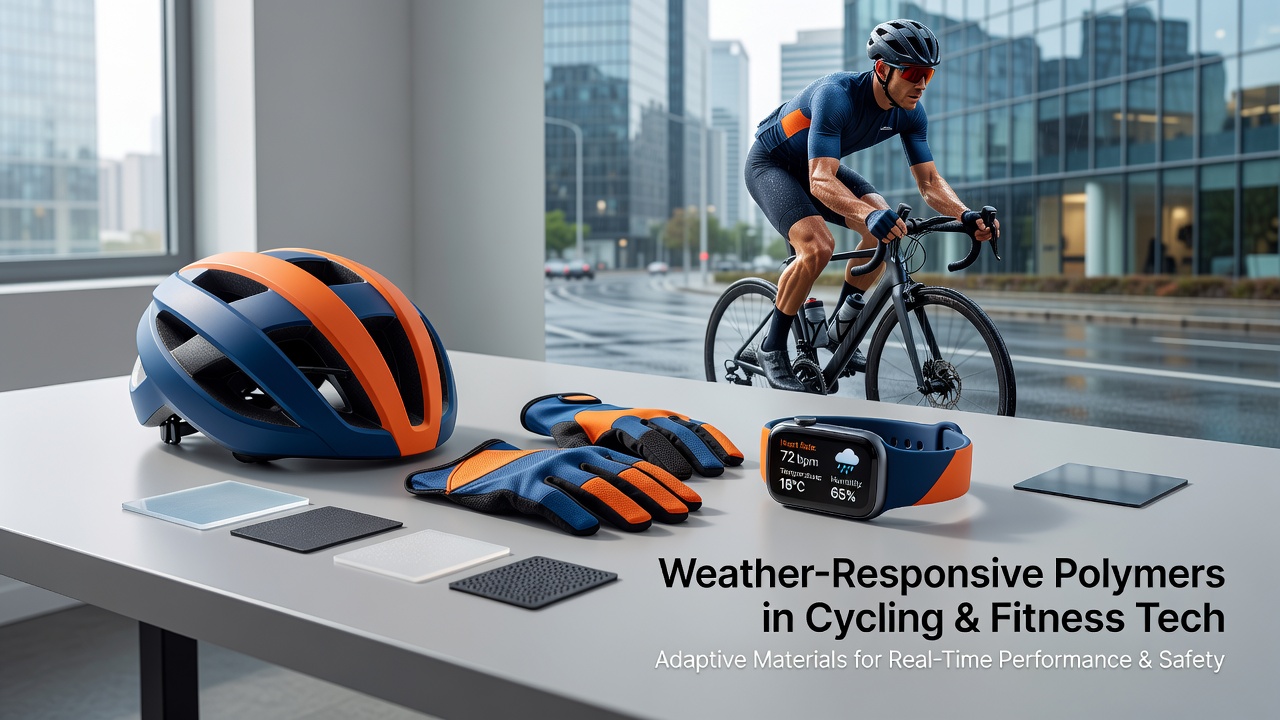
Heart-rate straps and GPS watch housings now feature outer shells molded from polymers that contract in high humidity to maintain skin contact pressure, which stabilizes optical sensor readings that would otherwise drift when sweat accumulates. A 2025–2026 collaborative study involving the Australian Institute of Sport and several polymer suppliers found that devices using these adaptive housings recorded heart-rate variance within 2 beats per minute across temperature swings of 25 degrees, whereas conventional units showed deviations exceeding 8 beats under identical conditions. Battery compartments and charging ports incorporate similar materials that seal more tightly when ambient moisture rises, reducing corrosion rates documented in coastal training environments.
Manufacturing and testing protocols
Production lines apply these polymers through multi-shot injection molding and plasma surface activation, processes that bond the responsive layer to rigid substrates without delamination after thousands of flex cycles. Accelerated weathering chambers simulate July 2026 conditions by cycling components between -10°C and 50°C with controlled UV exposure, and results show that properly formulated materials retain at least 92 percent of initial tensile strength after 1,200 hours, meeting updated durability benchmarks issued by international standards organizations. Observers note that supply-chain partners in North America and Asia have scaled precursor chemical production to meet projected demand from both professional cycling teams and consumer fitness brands.
Integration challenges and solutions
Design teams must balance the thickness of responsive layers against weight penalties, yet recent formulations achieve functional performance at under 1.2 millimeters, allowing direct replacement of existing parts without geometry changes. Calibration software in fitness devices now includes temperature and humidity offsets derived from the polymer’s known response curves, so recorded metrics remain comparable across training blocks conducted in different climates. Those who have reviewed longitudinal data from athletes training year-round report fewer mid-season equipment swaps once these materials enter regular use.
Conclusion
Weather-responsive polymers continue to move from laboratory development into commercial cycling and fitness products, supported by measurable improvements in material consistency and device reliability. Ongoing refinement of additive packages and surface treatments points toward broader adoption in additional outdoor equipment categories as production volumes increase and testing protocols mature.